How To Convert to a Saltwater Pool (Local Help Guide)
Saltwater pools have become a popular upgrade for homeowners who want a smoother swimming experience and more consistent water chemistry. The appeal goes beyond comfort and extends to convenience.
Instead of manually adding chlorine, a saltwater system generates it automatically, helping maintain stable sanitation levels with less day-to-day effort.
Converting an existing pool is not a simple plug-and-play upgrade. Equipment compatibility, plumbing layout, and water balance all matter. Many homeowners begin by searching for inground pool companies near them because a proper setup makes a noticeable difference in performance and long-term maintenance.
What's In This Guide
- What Is a Saltwater Pool Conversion?
- Is Your Inground Pool a Good Candidate for Saltwater?
- Tools and Equipment Needed for a Salt Water Pool Conversion
- How To Convert an Inground Pool to Saltwater: Step-By-Step Guide
- DIY vs. Hiring an Inground Pool Company Near You
- How Much Maintenance Does a Saltwater Pool Need?
- Frequently Asked Questions (FAQs)
- Upgrade Your Pool With Expert Saltwater Conversion Support
Quick Facts
✔ Saltwater conversion adds a salt chlorine generator.
✔ Saltwater pools still produce chlorine.
✔ Test water and equipment before installing.
✔ Proper system sizing prevents low output.
✔ Pros help with plumbing, wiring, and setup.
What Is a Saltwater Pool Conversion?
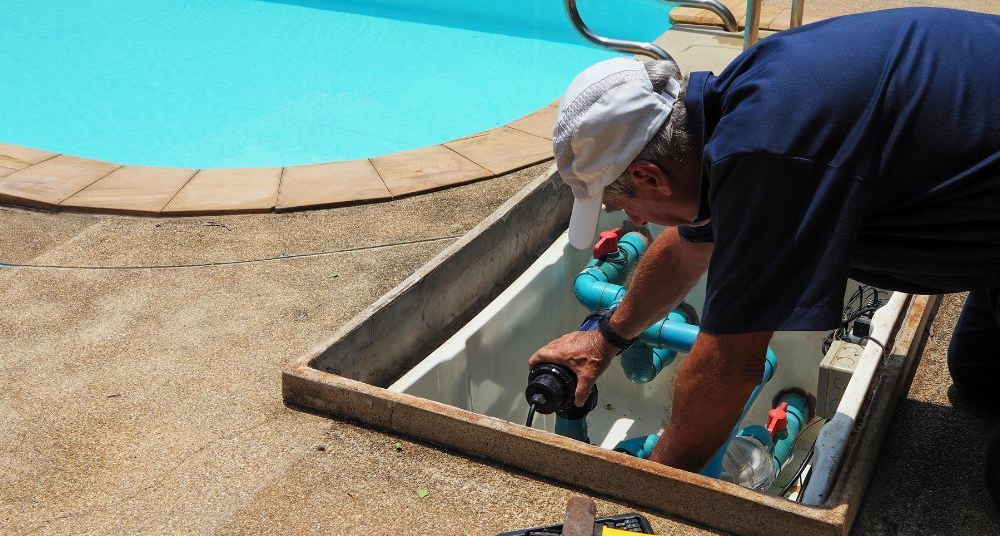
A saltwater pool conversion involves installing a salt chlorine generator into your existing pool system. This system uses dissolved salt to produce chlorine through a process called electrolysis.
The result is a steady supply of chlorine without the need for frequent manual dosing.
It is important to understand that saltwater pools are not chlorine-free. The difference lies in how chlorine is produced and maintained. Proper disinfectant levels are essential
to reduce the risk of waterborne illness in pools, regardless of the system used.
Most inground pools can be converted without draining the water, assuming the current chemistry is balanced and the system is in good working condition.
Is Your Inground Pool a Good Candidate for Saltwater?
Before starting a salt water pool conversion, take time to evaluate your pool’s structure and equipment.
Check Pool Surface and Materials
Saltwater systems are compatible with most pool types, including vinyl, fiberglass, and gunite. However, certain materials such as natural stone or unsealed metal fixtures may require attention. Salt can accelerate corrosion if surfaces are not properly maintained.
Review Current Pool Equipment
A conversion relies heavily on your existing system. Inspect the following:
- Pump efficiency and age
- Filter condition
- Heater compatibility
- Plumbing layout
- Automation systems
Older equipment may struggle to support a salt chlorine generator efficiently.
When to Call a Local Pool Company
If your pool has visible wear, outdated components, or unclear system specifications, this is the point where professional insight matters. Companies like
FJV Construction offer services such as filtration upgrades, repairs, and full pool system evaluations, which can help prepare your pool for a smooth conversion.
Tools and Equipment Needed for a Salt Water Pool Conversion
A successful conversion depends on selecting the right components.
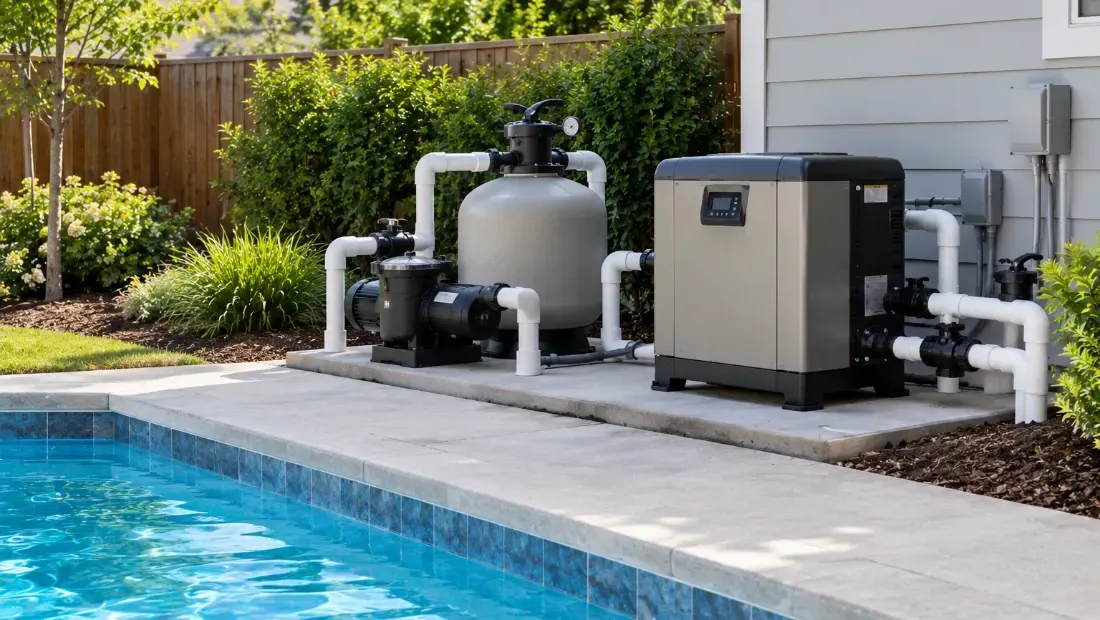
Salt Chlorine Generator
This is the core of the system. It converts salt into chlorine. Choose a unit rated for your pool’s size to avoid underperformance.
Salt Cell
Installed within the plumbing line, the salt cell is where electrolysis occurs. Proper placement is critical for consistent chlorine production
Control Panel
The control unit regulates chlorine output and monitors system performance.
Pool-Grade Salt
Use only high-purity pool salt. Household or rock salt can introduce unwanted minerals.
Water Testing Kit
Accurate testing ensures proper levels of:
- pH
- Alkalinity
- Calcium hardness
- Stabilizer
- Free chlorine
Maintaining balanced water chemistry is essential for protecting pool surfaces and equipment.
How To Convert an Inground Pool to Saltwater: Step-By-Step Guide
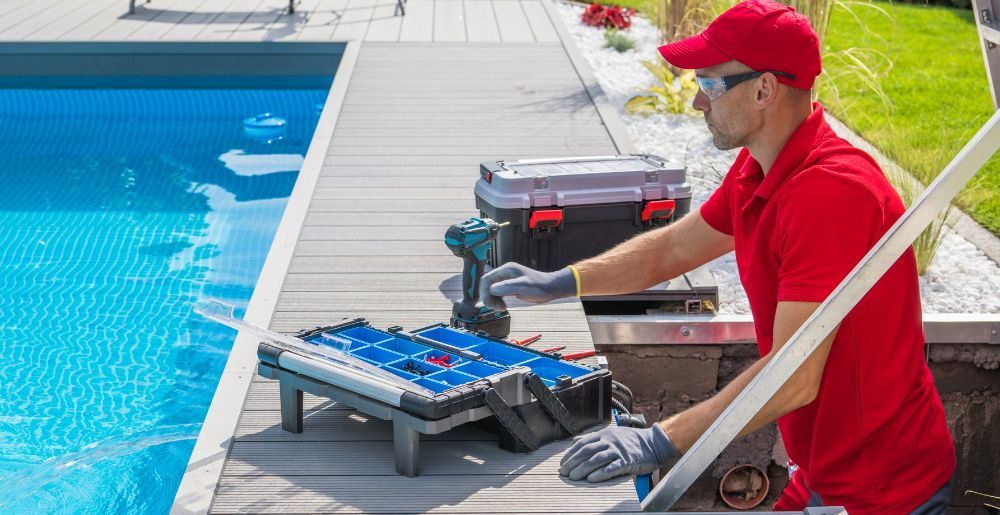
Converting your pool involves more than just adding salt. Each step plays a role in ensuring your system runs efficiently, safely, and consistently over time.
Step 1: Test and Balance Your Pool Water
Before starting any salt water pool conversion, your existing water chemistry needs to be stable. This step sets the foundation for how efficiently your new system will perform and helps prevent early issues with chlorine production.
- Test pH, alkalinity, calcium, and chlorine levels
- Adjust water to recommended ranges
- Remove algae, debris, or cloudiness
- Call inground pool companies near me if water issues persist
Step 2: Calculate Pool Volume and Choose the Right System
Selecting the correct equipment is critical when you convert inground pool to saltwater. A properly sized system ensures consistent chlorine generation without overworking the unit.
- Measure pool size in gallons
- Select a properly sized salt water conversion kit for inground pool
- Oversize slightly for better performance
- Get expert help if unsure about system compatibility
Step 3: Turn Off Power and Prepare Equipment Area
Safety and preparation matter before installing any new system. This step ensures your workspace is ready and reduces the risk of electrical or equipment damage during installation.
- Shut off power at the breaker
- Locate the return line for installation
- Clear space for the control panel
- Call a pro if electrical work is involved
Step 4: Install the Salt Cell in the Plumbing Line
The salt cell is where chlorine production happens, so placement is important. Proper installation helps maintain water flow and protects other pool components.
- Cut into the return line
- Install the salt cell in the correct flow direction
- Place it after filter and heater
- Hire help if plumbing needs adjustment
Step 5: Mount and Connect the Control Panel
The control panel manages chlorine output and system performance. Correct setup ensures your pool conversion process runs efficiently from the start.
- Install panel in a dry, accessible area
- Connect it to the salt cell and power
- Follow manufacturer instructions
- Use a professional for wiring or automation setup
Step 6: Add Pool-Grade Salt
Adding the correct amount of salt is essential for proper chlorine generation. This step directly impacts how well your saltwater system operates.
- Use only high-purity pool salt
- Add based on pool size and system specs
- Brush to help dissolve evenly
- Run pump to circulate water
Step 7: Start the Salt Chlorine Generator
Once the salt is fully dissolved, the system can begin producing chlorine. Initial setup and testing ensure everything is working as expected.
- Turn on the system after salt dissolves
- Set initial chlorine output
- Test water after 24 to 48 hours
- Call a pro if errors or low chlorine occur
Step 8: Monitor and Maintain the System
After completing the salt water pool conversion, ongoing monitoring keeps your pool clean, balanced, and safe for use. Regular checks help extend the life of your equipment.
- Test water weekly
- Adjust chlorine output as needed
- Clean salt cell when buildup appears
- Maintain pump and filter for circulation
When To Call a Local Pool Company
Knowing when to bring in a professional can help avoid costly mistakes and installation issues.
✔ Unsure about pool size or system choice
✔ Plumbing or electrical changes are needed
✔ Water chemistry will not stabilize
✔ Equipment is old or underperforming
DIY vs. Hiring an Inground Pool Company Near You
Some homeowners can handle a basic saltwater conversion, but the right choice depends on your pool’s condition, equipment setup, and comfort level with installation. Before deciding, consider how much plumbing, electrical work, and water balancing your project requires.
DIY May Work If:
- Your equipment is modern and compatible
- Plumbing is simple and accessible
- No electrical changes are required
- You understand water chemistry basics
Hire a Local Pool Company If:
- Your system needs electrical work
- Plumbing adjustments are required
- Equipment is outdated or inefficient
- You want long-term reliability
Working with experienced professionals can prevent setup issues that affect water quality and system lifespan.
How Much Maintenance Does a Saltwater Pool Need?
Saltwater systems reduce manual chlorine handling, but they still require routine care to keep the system efficient and the water safe. After converting pool to saltwater, ongoing maintenance becomes more about monitoring and fine-tuning rather than constant chemical adjustments.
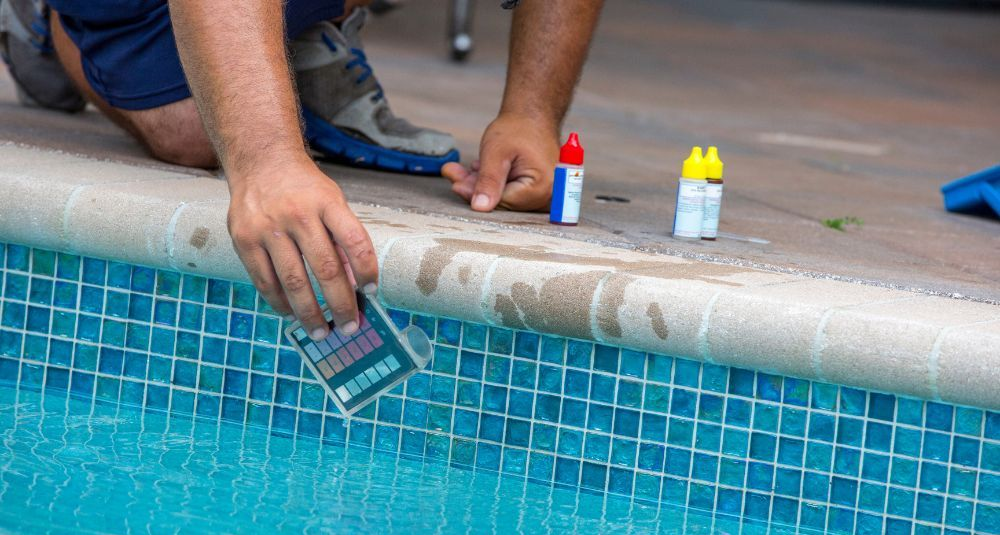
Regular Water Testing and Balancing
Even after a salt water pool conversion, balanced water is essential for swimmer comfort and equipment protection.
- Test water at least once a week
- Monitor pH, alkalinity, and chlorine levels
- Keep pH in range to prevent scaling or corrosion
- Adjust stabilizer levels as needed
Salt Level Monitoring
Most systems will alert you when salt levels are too low, but manual checks help avoid issues.
- Check salt levels every few weeks
- Maintain levels recommended by your system
- Add salt only when levels drop
- Avoid overfilling, which can affect performance
Cleaning the Salt Cell
Salt cell maintenance is a key part of keeping your salt water conversion kit for inground pool working efficiently.
- Inspect the salt cell every 2 to 3 months
- Look for calcium buildup or scaling
- Clean using manufacturer-approved methods
- Avoid over-cleaning to extend cell lifespan
Filter and Pump Maintenance
Proper circulation supports even chlorine distribution after you convert inground pool to saltwater.
- Clean or backwash the filter regularly
- Check pump performance and circulation
- Remove debris from skimmers and baskets
- Ensure consistent water flow through the system
Seasonal Pool Care
Seasonal maintenance helps prevent damage and keeps your system running smoothly year-round.
- Prepare the system for opening and closing
- Inspect equipment before peak swimming season
- Winterize components if needed
- Recheck salt and chemical levels after reopening
When To Call an Inground Pool Company Near You
Many homeowners rely on inground pool companies near me for ongoing maintenance to ensure their saltwater system stays efficient and reliable.
✔ Salt system shows error codes or low output
✔ Water chemistry becomes difficult to manage
✔ Equipment shows wear or reduced performance
✔ You need routine inspections or servicing
Frequently Asked Questions (FAQs)
How long does a saltwater pool conversion take?
Most conversions can be completed in one day if the pool equipment is compatible and the water is already balanced. More time may be needed if plumbing, electrical work, or equipment repairs are required.
Will converting pool to saltwater damage my pool equipment?
It will not damage compatible equipment when installed and maintained correctly. Problems are more likely when metal fixtures, heaters, stone coping, or older components are already worn or not salt-compatible.
How much salt does an inground pool need?
The amount depends on your pool’s volume and the generator’s required salinity range. Always calculate gallons first and follow the manufacturer’s recommended salt level instead of estimating.
Can a saltwater pool be switched back to chlorine?
Yes, but it may require turning off or removing the salt system and adjusting water chemistry. A local pool company can help confirm the simplest option based on your current equipment.
Why is my saltwater pool not producing enough chlorine?
Common causes include low salt, poor water balance, a dirty salt cell, weak circulation, or an undersized system. If adjustments do not fix it, contact inground pool companies near me for troubleshooting.
Upgrade Your Pool With Expert Saltwater Conversion Support
For homeowners in Danbury, CT, who want a reliable setup without the guesswork, working with experienced professionals helps avoid common issues and protects your investment.
FJV Construction offers the expertise needed to handle saltwater conversions, repairs, filtration, and full pool system support. Our hands-on approach ensures your pool is installed correctly and maintained for long-term performance.
Contact us today!