How Fire and Water Features Upgrade Your Pool
Adding fire and water features is one of the best ways to make a pool feel more custom, functional, and visually impressive. Features like fire pits, waterfalls, and bubblers can turn a basic pool into a more inviting outdoor space for relaxing, entertaining, and everyday use.
Recent outdoor renovation data reflects this trend. A study found that
21% of homeowners added or upgraded fire features and 18% added water features during outdoor renovation projects.
For homeowners in Danbury, CT, who are building or renovating a pool, understanding how these features work and how to incorporate them correctly can make the difference.
What's In This Guide
- What Are Fire and Water Features in Pool Design?
- Fire Pits vs. Waterfalls vs. Bubblers: Which Feature Fits Your Pool Best?
- How To Choose the Right Fire or Water Feature for Your Pool
- 4 Design Tips for Blending Fire and Water Features Into One Cohesive Backyard
- Safety Considerations for Fire Features Around Pools
- Common Mistakes To Avoid When Adding Fire or Water Features
- What To Look for in a Pool Contractor in Danbury, CT
- Frequently Asked Questions (FAQs)
- Start Planning Your Custom Pool Features With FJV Construction
Quick Facts
✓ Fire pits add warmth and ambiance. ✓ Waterfalls add sound and movement. ✓ Bubblers enhance shallow pool areas. ✓ These features make pools feel more custom. ✓ The right choice depends on layout and use.
What Are Fire and Water Features in Pool Design?
Fire and water features are architectural elements that enhance both the aesthetics and the functionality of a swimming pool area. Instead of serving only decorative purposes, these additions influence how the space is used throughout the day and evening.
Fire Pits
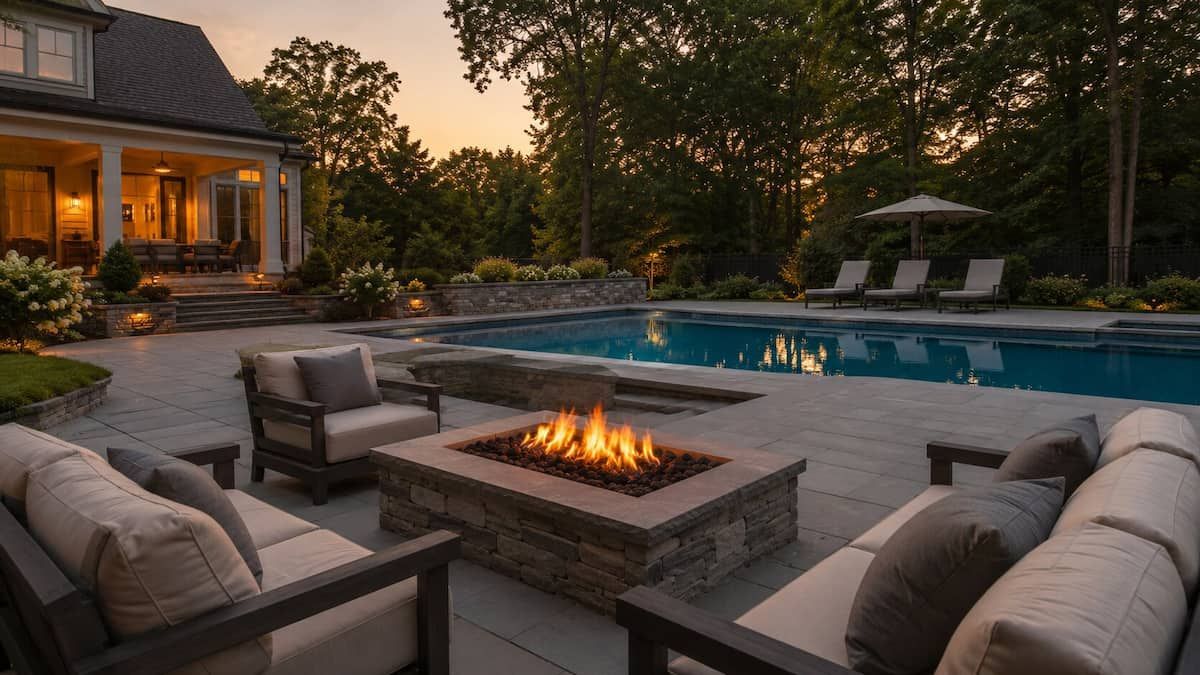
Fire pits are one of the most popular upgrades for poolside environments. These features create a natural gathering point where people can relax, socialize, or unwind after swimming.
Common poolside fire features include:
- Built-in gas fire pits surrounded by seating
- Raised fire bowls placed on columns or pool edges
- Linear fire burners integrated into walls or coping
Gas-powered fire features are often preferred for pool environments because they ignite easily and offer consistent flames without the smoke associated with wood-burning fires.
Fire pits also extend the usability of outdoor spaces. Even during cooler Connecticut evenings or early fall, a fire feature allows homeowners to continue enjoying the pool area comfortably.
Waterfalls
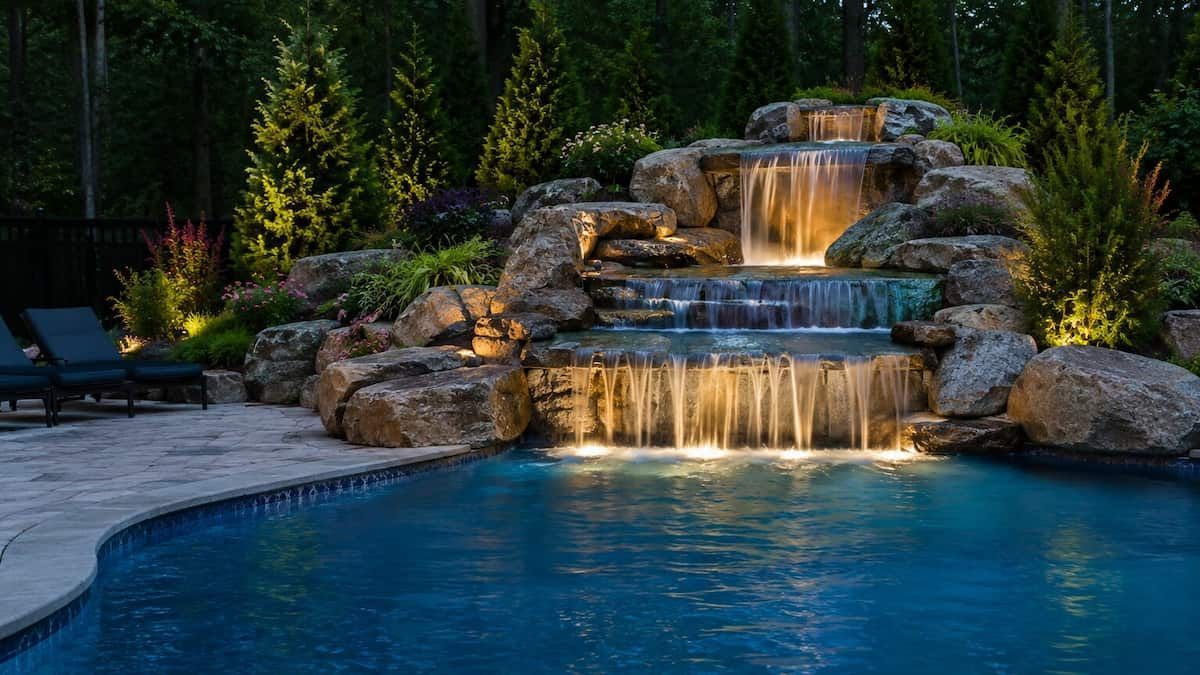
Waterfalls introduce motion and sound to a pool environment. Unlike static design elements, waterfalls constantly circulate water, creating a relaxing visual and acoustic effect.
Common waterfall designs include:
- Natural rock waterfalls
- Sheer descent waterfalls
- Raised wall spillways
- Contemporary sheet waterfalls
Beyond aesthetics, the sound of flowing water can help mask neighborhood noise, traffic, or nearby activity. Many homeowners choose waterfalls specifically to create a calmer, resort-like atmosphere in their backyard.
Bubblers
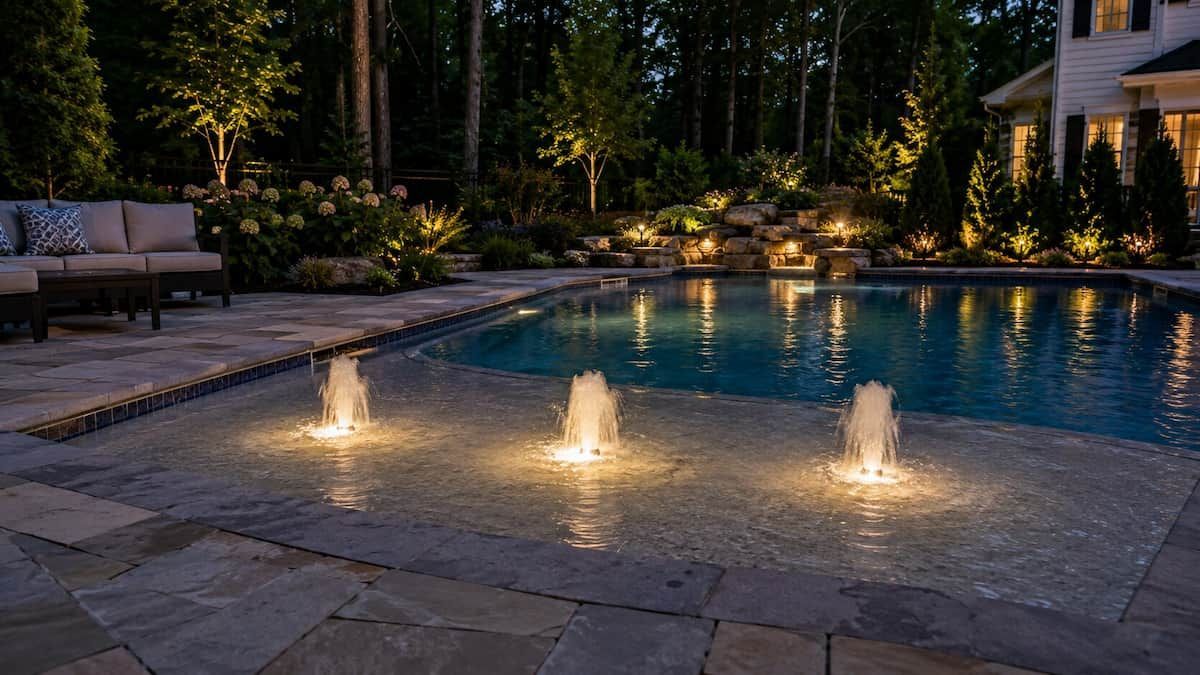
Bubblers are small water jets that push streams of water upward from shallow pool areas. They are commonly installed on tanning ledges or Baja shelves, which are shallow sections of the pool designed for lounging.
Unlike waterfalls, bubblers are subtle features that add movement without dominating the design. They are especially popular in family-friendly pools because children enjoy interacting with the gentle water streams.
Bubblers can also incorporate LED lighting, which creates dramatic nighttime effects when illuminated after dark.
Fire Pits vs. Waterfalls vs. Bubblers: Which Feature Fits Your Pool Best?
Choosing the right feature depends on the layout of the pool, how the space will be used, and the overall design goals.
Fire Pits for Social Spaces
Fire pits work best when the goal is to create a gathering area. They are ideal for homeowners who entertain frequently or want a relaxing place to sit after swimming.
Fire features often pair well with:
- Built-in seating walls
- Outdoor kitchens
- Poolside patios
Waterfalls for Visual Drama
Waterfalls are typically the most visually striking pool feature. They provide motion, sound, and architectural presence.
Large waterfalls often become the focal point of the entire backyard. They work particularly well with natural landscaping and stone pool designs.
Bubblers for Shallow Areas
Bubblers are subtle but effective upgrades for shallow ledges or tanning shelves.
They are especially popular for:
- Family pools
- Modern pool designs
- Pools that emphasize relaxation areas
Combining Multiple Features
Many modern pool designs combine two or more of these elements.
Examples include:
- Fire bowls with spillover waterfalls
- Bubblers along tanning ledges paired with a raised wall waterfall
- Linear fire burners integrated into pool edges
The goal is to create balance so that the features complement each other without overwhelming the overall design.
How To Choose the Right Fire or Water Feature for Your Pool
Selecting the right features requires more than choosing what looks attractive. Practical considerations play a major role.
Step 1: Identify How the Pool Area Will Be Used
Start by thinking about how the backyard will function.
Questions to consider include:
- Will the space primarily be used for entertaining?
- Is the pool mainly for family relaxation?
- Is visual appeal the top priority?
Fire pits support social interaction, while waterfalls and bubblers tend to emphasize visual atmosphere.
Step 2: Consider Pool Layout and Sightlines
Placement matters. Features should be positioned where they can be seen and appreciated from key areas such as patios, windows, or outdoor seating.
Waterfalls often work best when located directly across from the main viewing area.
Step 3: Evaluate Equipment and Utilities
Adding fire or water features may require adjustments to gas lines, plumbing systems, or electrical components. Pool pumps can be one of the largest energy users in a home, sometimes costing up to $270 per year to operate.
Step 4: Account for Maintenance Needs
Water features increase circulation and movement within the pool, which can affect cleaning routines and filtration needs.
Designs should include easy access to pumps and plumbing so maintenance can be performed efficiently.
Step 5: Review Safety and Local Requirements
Safety should always be part of the planning process. Fire features must be installed with appropriate clearances and fuel systems.
Before adding features such as fire pits, waterfalls, or bubblers to a backyard pool, homeowners should confirm permit, barrier, and inspection requirements
with Danbury’s local permitting offices.
4 Design Tips for Blending Fire and Water Features Into One Cohesive Backyard
Well-designed pools feel balanced and intentional. When fire and water features are added without a clear plan, the space can feel cluttered.
1. Keep Scale Proportional
Large waterfalls may overpower small pools, while oversized fire pits can dominate compact patios.
The size of each feature should complement the pool’s overall dimensions.
2. Coordinate Materials
Using consistent materials helps unify the design.
Common material combinations include:
- Stone veneers that match pool coping
- Pavers that continue from the patio into seating areas
- Matching finishes between fire bowls and water feature walls
This approach makes the backyard feel like a single coordinated space.
3. Plan for Key Viewing Angles
Features should be positioned where they can be seen from the most frequently used areas.
For example, a raised waterfall wall facing the house creates an attractive visual when looking out from interior windows.
4. Avoid Overcrowding
In many cases, one strong water feature paired with one fire feature is enough to create a visually appealing environment.
Overloading the design with too many focal points can make the backyard feel busy.
Safety Considerations for Fire Features Around Pools
Fire features can enhance the atmosphere around a pool, but they must be installed and used responsibly. Proper placement, fuel selection, and supervision are essential for reducing fire risks.
Maintain Safe Distances
- Place fire pits or fire bowls at least 10 feet away from structures or combustible materials such as fences, patio furniture, or landscaping.
- Ensure the surrounding area is clear of flammable items like leaves, branches, or outdoor fabrics.
- Install fire features on non-flammable surfaces such as concrete, stone, or pavers.
Avoid Dangerous Fuel Practices
- Never use gasoline or other flammable liquids to start or relight a fire pit.
- Do not add liquid fuel after ignition attempts, even if flames appear to be out.
- Avoid alcohol-based tabletop fire pits or liquid-burning fire products, which regulators have linked to serious burn injuries.
Keep Fire Control Equipment Nearby
- Keep a garden hose, bucket of water, sand, or a fire extinguisher within reach when the fire feature is in use.
- Ensure someone is present and supervising the fire at all times.
- Fully extinguish the fire before leaving the area or going indoors.
Consider Professional Installation
- Built-in fire features often require gas lines, ventilation planning, and proper clearances.
- Professional installation helps ensure compliance with local building codes and safe placement around pool decks and seating areas.
- Licensed installers can also verify that gas connections, ignition systems, and surrounding materials meet safety standards.
Common Mistakes To Avoid When Adding Fire or Water Features
Several design mistakes can reduce the effectiveness of these upgrades.
Common issues include:
- Choosing features based only on appearance
- Installing oversized elements in small pools
- Ignoring equipment capacity or pump requirements
- Using unsafe fire products
- Placing features where they are rarely seen
- Overcrowding the pool area with too many focal points
Careful planning ensures the final design enhances the backyard rather than overwhelming it.
What To Look for in a Pool Contractor in Danbury, CT
Choosing the right pool contractor can make a big difference in the quality, safety, and long-term performance of your project. Before hiring a company, it helps to look at a few key qualifications.
- Proper licensing and insurance
- Experience with pool construction and renovations
- Familiarity with local permits and building requirements
- Clear project timelines and pricing
- Strong communication throughout the project
- A portfolio of completed pool work
- Positive local reviews or client feedback
Frequently Asked Questions (FAQs)
Do fire and water features make a pool harder to maintain?
They can add some maintenance, but the impact depends on the design. Waterfalls and bubblers may increase cleaning needs or affect circulation, while fire features may need occasional burner or ignition checks. A well-planned setup keeps upkeep manageable.
Can fire and water features be added during a pool renovation?
Yes, many of these features can be added when renovating an existing pool. The final options usually depend on the pool’s layout, plumbing, gas or electrical access, and the condition of the surrounding deck or structure.
Which pool feature adds the most visual impact?
A waterfall or raised water wall usually creates the strongest visual focal point because it adds height, movement, and sound. Fire bowls can also make a strong statement, especially when used near the pool edge or combined with lighting.
Are bubblers only useful for family pools?
No. Bubblers are often used in family-friendly designs, but they also work well in modern or luxury pools. They add movement and visual interest to shallow ledges without taking up much space.
What is the best time to plan pool feature upgrades?
The best time is during the early design phase of a new build or renovation. Planning ahead makes it easier to coordinate layout, utilities, materials, and budget before construction begins.
Start Planning Your Custom Pool Features With FJV Construction
If you are considering building a new pool or upgrading an existing one in Danbury or the surrounding Connecticut communities, working with a knowledgeable local builder can make the process smoother.
FJV Construction has experience designing and installing custom pool features that enhance both the appearance and functionality of outdoor spaces.