
How to Clean a Green Pool in Bethel, CT
Quick Facts
- Algae, poor circulation, or unbalanced chemistry usually cause green pool water.
- Brushing helps chlorine reach algae stuck to pool surfaces.
- Shocking at dusk gives chlorine more time to work effectively.
- Continuous filtration is necessary to remove dead algae from the water.
- Professional help is best when algae returns, or the pool stays green after treatment.
What’s In This Guide
- Why Pool Water Turns Green in the First Place
- What You Need Before Cleaning a Green Pool
- How to Clear Up a Green Pool: Step-by-Step
- How Long Does It Take to Clear a Green Pool?
- Common Mistakes That Keep a Pool Green
- When to Call a Professional Pool Service in Bethel, CT
- How to Prevent Your Pool From Turning Green Again
- Frequently Asked Questions
- Get Expert Help Before Pool Problems Get Worse
A green pool can go from mildly cloudy to completely unusable within days, especially during humid Connecticut summers when algae spreads quickly, and circulation problems go unnoticed. In Bethel, CT, heavy rain, heat waves, and inconsistent pool maintenance often accelerate algae growth and water imbalance.
Cleaning a green pool takes more than adding chlorine. Proper brushing, filtration, water balancing, and circulation all work together to restore safe swimming conditions. This step-by-step guide explains how to clear up a green pool properly, what mistakes slow the process down, and when it makes sense to call a local swimming pool service and repair
professional in Bethel before the problem gets worse.
Why Pool Water Turns Green in the First Place
Green water almost always points to algae growth. Algae spores naturally enter pools through wind, rain, leaves, swimsuits, and contaminated equipment. Once chlorine levels drop or circulation weakens, those spores multiply quickly.
The Main Cause: Algae Growth
Algae thrive in warm, stagnant water. In Bethel, pools often turn green after:
- Heavy summer rainstorms
- Extended heat waves
- Inconsistent chlorine treatment
- Poor filtration
- Debris buildup
- Opening the pool late in spring
Different Shades of Green and What They Mean
Not all green pools are equally severe.
- Light green water usually signals early algae growth.
- Dark green water often means a heavy algae bloom.
- Cloudy green or blue-green water may indicate dead algae suspended in the water.
When Green Water Signals a Bigger Pool Problem
Some pools continue turning green even after repeated chemical treatments. That often points to underlying equipment problems such as:
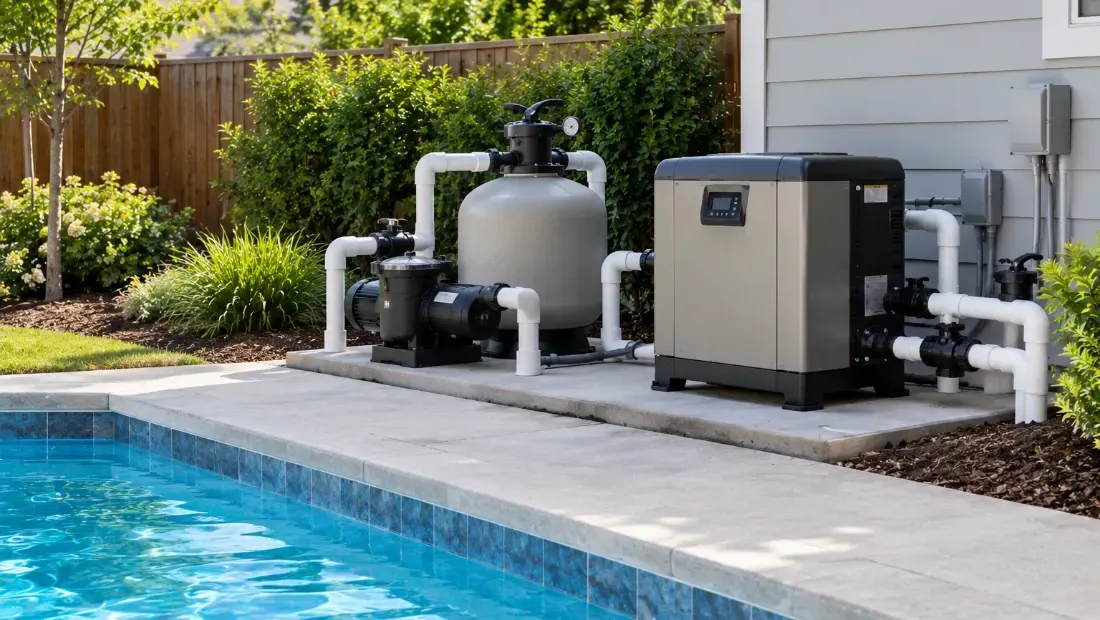
- A failing pool pump
- Poor water circulation
- Dirty or damaged filters
- Incorrect chemical balancing
- Leaks affecting filtration performance
What You Need Before Cleaning a Green Pool
Preparation makes the cleanup process faster and more effective. Before starting, gather:
- Pool brush
- Pool vacuum
- Water testing kit or test strips
- Pool shock treatment
- Algaecide
- Protective gloves
- Leaf net or skimmer
Word of caution: If the pool water is extremely dark green or visibility is poor, avoid entering the pool until circulation and chemical levels improve. Severe algae growth can hide debris, damaged surfaces, or safety hazards beneath the water.
How to Clear Up a Green Pool: Step-by-Step
Cleaning a green pool requires more than dumping chlorine into the water. Each step works together to eliminate algae.
Step 1: Remove Debris From the Pool
Start by removing all visible debris. Leaves, insects, branches, and organic matter consume chlorine quickly. If debris stays in the pool, the shock treatment becomes less effective.
Use a skimmer net to clear:
- Leaves
- Twigs
- Dirt
- Dead insects
- Floating debris
This first step immediately improves circulation and chemical efficiency.
Step 2: Brush the Walls, Floor, and Stairs Thoroughly
Brushing is one of the most important parts of how to fix a green pool.
Algae cling tightly to pool surfaces, especially:
- Corners
- Pool steps
- Behind ladders
- Along tile lines
- Around returns and drains
Thorough brushing breaks apart algae spores and exposes them to chlorine treatment. For severe algae growth, aggressive brushing may need to be repeated several times during the cleanup process.
Step 3: Test and Balance Water Chemistry
Before shocking the water, confirm chemical levels.
Ideal Levels Before Shocking
| Pool Chemistry | Recommended Range |
|---|---|
| pH | 7.4 to 7.6 |
| Total Alkalinity | 80 to 120 ppm |
| Chlorine | Near zero before shock |
Step 4: Shock the Pool at Dusk
The best time to shock a green pool is after sunset. Sunlight rapidly burns off chlorine through UV exposure. Applying shock at dusk gives chlorine more time to destroy algae overnight.
For effective green pool cleanup:
- Light green pools usually require a double dose of shock.
- Dark green pools often require a triple dose.
Liquid chlorine is typically the fastest option for severe algae blooms.
Step 5: Run the Pool Filter Continuously
Once the shock treatment is added, run the filtration system continuously for at least 24 hours.
The water will usually transition through stages:
- Green
- Cloudy blue-green
- Cloudy white or blue
- Clear
Cloudiness often means the algae are dying and being filtered out. In many Bethel pools, clogged filters and restricted circulation are major reasons algae return shortly after treatment. Continuous filtration is one of the most important parts of cleaning a green pool successfully.
Step 6: Clean or Backwash the Filter
Dead algae clogs filters quickly. Cleaning the filter after shocking helps maintain proper water flow and filtration efficiency. Different filter systems require different cleaning methods, but all filters must be cleaned thoroughly during green pool cleaning to prevent algae from circulating back into the water.
Sand Filters
Use the backwash setting until the water runs clear. After backwashing, rinse the filter briefly before returning it to the normal filter setting.
D.E. Filters
Clean or recharge the filter grids thoroughly. Dead algae can clog D.E. grids quickly, so pressure should be checked often during cleanup.
Cartridge Filters
Remove and rinse cartridges completely using a hose with strong pressure. Spray between the pleats carefully to remove trapped algae, dirt, and fine debris.
Step 7: Vacuum Dead Algae From the Pool
Once algae settles to the bottom, vacuum the pool carefully. If your system allows it, vacuum to waste. This removes dead algae directly from the pool instead of recirculating it through the filter. Vacuuming too early can stir algae back into suspension and prolong cloudy water.
Step 8: Add Algaecide to Prevent Regrowth
After chlorine levels drop below 5 ppm, apply a quality algaecide. Algaecide helps prevent remaining spores from multiplying again. This final step is especially important during hot Connecticut summers when algae growth accelerates rapidly.
How Long Does It Take to Clear a Green Pool?
Most pools can recover within 24 to 48 hours, but timing depends on several factors. Pools with damaged filtration systems or recurring circulation issues may take longer to recover, even with aggressive chemical treatment.
| Severity | Estimated Cleanup Time |
|---|---|
| Mild algae | About 24 hours |
| Moderate algae | 24 to 48 hours |
| Severe algae | Several days |
Factors That Affect Cleanup Speed
Several conditions impact how quickly a pool clears:
- Pool size
- Water temperature
- Filter condition
- Circulation quality
- Severity of algae growth
- Chemical balance
- Frequency of brushing
Common Mistakes That Keep a Pool Green
Many homeowners unknowingly delay the cleanup process by treating the symptoms instead of the cause. Small mistakes with brushing, timing, filtration, or chemical balance can keep algae active even after shock has been added.
Not Brushing Enough
Algae attach firmly to pool walls, steps, corners, and ladders. Without thorough brushing, chlorine may only treat the water while algae remains stuck to surfaces and continues to spread.
Shocking During Daylight
Sunlight weakens chlorine quickly, especially during warm afternoons. Shocking at dusk gives the treatment more time to work overnight and helps avoid wasting chemicals.
Turning Off the Filter Too Soon
Continuous filtration is critical during green pool cleaning because dead algae must be removed from the water. Turning the filter off too early can leave debris suspended and make the pool look cloudy or green again.
Ignoring Water Chemistry
High pH can make chlorine less effective, even when the pool has been heavily shocked. Testing and balancing the water first helps the treatment attack algae instead of fighting poor chemistry.
Using Too Little Chlorine
A lightly green pool may respond to a standard dose, but darker water usually needs stronger treatment. Using too little chlorine can weaken the cleanup process and allow algae to recover instead of dying off.
When to Call a Professional Pool Service in Bethel, CT
Not every green pool can be cleared with basic chemicals and brushing alone. In some cases, ongoing algae growth or equipment failure can make professional service the safer and faster option.
If the Pool Stays Green After Multiple Treatments
A pool that remains green after repeated shocking often has deeper water chemistry or circulation issues. Professional green pool cleanup may be necessary to identify hidden circulation problems, filtration issues, or chemical imbalances that continue feeding algae growth.
If the Filter or Pump Stops Working Properly
Weak circulation can prevent chlorine from reaching algae throughout the pool. Problems with the pump, filter, or plumbing system usually require swimming pool service and repair to keep the water from turning green again.
If Black Algae Starts Appearing
Black algae can attach deep into pool surfaces and is much harder to remove than standard green algae. Professional treatment is often necessary because scrubbing and household chemicals may not fully eliminate it.
If the Water Becomes Extremely Cloudy
Severely cloudy water can make it difficult to see the bottom of the pool, creating both safety and sanitation concerns. This usually signals excessive algae buildup or filtration problems that need immediate attention.
If Algae Keeps Coming Back
Recurring algae growth often points to an imbalance that has not been fully corrected. A professional inspection can identify underlying issues before they lead to more costly repairs or extended pool downtime.
How to Prevent Your Pool From Turning Green Again
Once the water is clear, consistent maintenance becomes the priority.
Maintain Proper Chlorine Levels
Regular sanitizer levels help stop algae before it spreads.
Test Water Weekly
Weekly testing catches pH and chlorine issues early.
During heavy rain or extreme heat, testing more frequently is smart.
Clean Filters Regularly
A clean filter improves circulation and keeps contaminants from building up.
Run the Pump Daily
Proper water movement helps distribute chemicals evenly throughout the pool.
Most residential pools should circulate water for at least 8 to 12 hours daily during summer.
Schedule Seasonal Pool Maintenance Service
Spring openings, post-storm inspections, and mid-season equipment checks help reduce the risk of recurring algae problems in Bethel pools.
Frequently Asked Questions
Can pool covers contribute to algae growth?
Yes, pool covers can trap heat and moisture, especially during hot weather. If debris and untreated water sit under the cover for too long, algae can develop more easily.
Why does pool water smell strong when it turns green?
A strong chlorine smell often means the chlorine is reacting with contaminants instead of properly sanitizing the water. Green pools usually contain high levels of organic matter that affect water quality.
Should pool water be tested after heavy storms?
Yes, storms can dilute chemicals and introduce contaminants into the pool. Testing the water afterward helps catch imbalances before algae has a chance to spread.
Why does algae collect around pool steps and ladders?
Pool steps and ladders often have weaker water circulation compared to open areas of the pool. Algae can settle and grow more easily in those spots if they are not brushed regularly.
Can opening a pool late for the season cause green water?
Yes, leaving a pool closed too long during warm weather can allow algae to develop under the cover. Pools that are opened late in spring often need more extensive cleaning and chemical balancing.
Get Expert Help Before Pool Problems Get Worse
Cleaning a green pool requires more than shock treatment alone. Proper circulation, water balance, filtration, and algae removal all play a role in restoring safe and clear swimming conditions.
When algae keeps returning or pool equipment stops working properly, professional service can help identify the underlying cause before the problem escalates. FJV Construction provides dependable green pool cleaning, pool maintenance, and
swimming pool service and repair for homeowners throughout Bethel, CT.
Addressing algae problems early helps protect your equipment, improve water quality, and reduce the risk of long-term pool damage.