Choosing Between Automatic and Manual Pool Covers in CT
What’s In This Guide
- What Is the Difference Between an Automatic and a Manual Pool Cover?
- Which Pool Cover Type Offers Better Safety for Connecticut Families?
- How Well Does Each Cover Handle a Connecticut Winter?
- How Do You Choose the Right Pool Cover for Your Pool in Connecticut?
- When an Automatic Cover Makes the Most Sense
- When a Manual Safety Cover Is the Better Choice
- Frequently Asked Questions
- Choose the Right Pool Cover for Your Connecticut Pool
Connecticut pool owners face a straightforward but important choice each season: automatic or manual pool cover?
Both options protect the pool, reduce maintenance, and extend the swim season. The right pick depends on budget, pool shape, safety priorities, and how much physical effort a homeowner wants to put into opening and closing the pool each year.
Quick Facts
- Automatic pool covers and manual safety covers serve different primary purposes: automatic covers are built for daily swim-season convenience, while manual safety covers are engineered for winter closure and passive safety protection.
- Manual safety covers are the more reliable option for Connecticut winters, as most automatic cover manufacturers do not recommend full-season deployment under sustained snow load or repeated freeze-thaw cycling.
- Pool shape matters. Automatic covers work best on rectangular and geometric pools. Freeform and custom-shaped pools are better suited to manual covers, including Loop-Loc alternatives.
- Many pool builders recommend pairing both cover types: an automatic cover for day-to-day use during swim season and a manual winter pool cover for the closed season.
What Is the Difference Between an Automatic and a Manual Pool Cover?
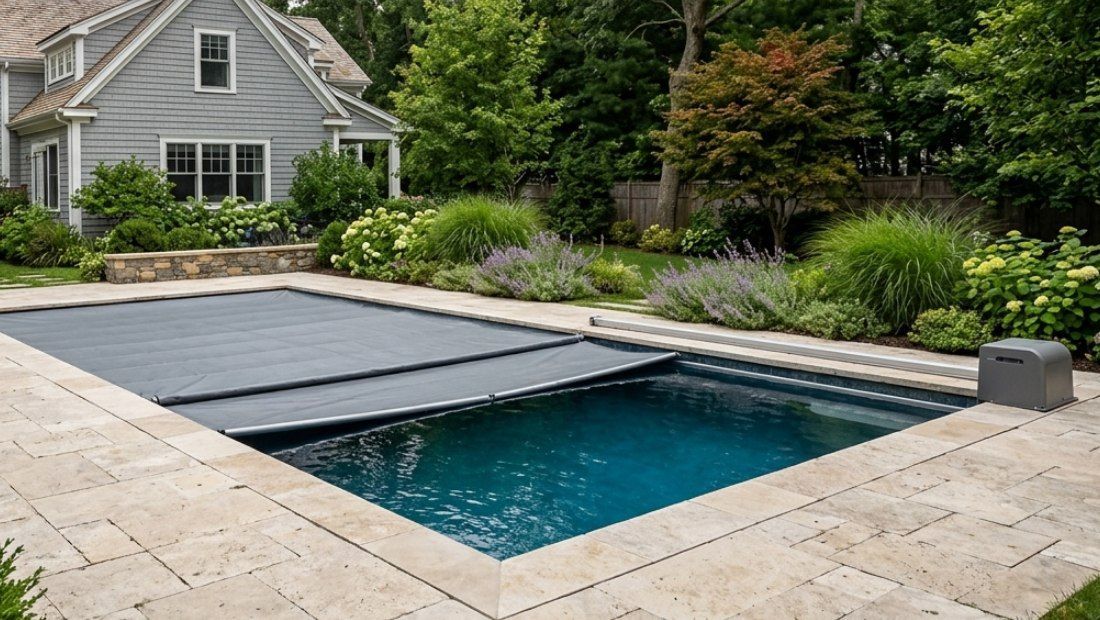
Automatic pool covers use a motorized track system to open and close the cover at the push of a button. Manual safety covers are anchored to the pool deck with straps and brass hardware, requiring physical labor to install and remove each season.
Automatic covers:
- Motorized reel system mounted at one end of the pool
- Deploys and retracts in under 60 seconds
- Requires recessed housing or deck-mounted track
- Best suited for rectangular or geometric pool shapes
Manual safety covers:
- Stretched across the pool and secured with deck anchors, typically 12 to 40 or more depending on pool size
- Installed once for winter, removed in spring
- Compatible with freeform, irregular, and custom pool shapes
- No motorized components or electrical requirements
Which Pool Cover Type Offers Better Safety for Connecticut Families?
Both automatic and manual pool covers can improve backyard safety, but they do not always provide the same level of protection in everyday use. A properly installed manual safety cover often provides more consistent protection because it stays secured across the pool during the off-season. An automatic cover can also help prevent accidental entry, but only when it is fully closed and working properly.
Key safety considerations:
A safety-rated pool cover should be strong enough to help prevent accidental entry into the pool area.- A standard tarp, solar blanket, or basic pool cover should not be treated as a child safety cover.
- Automatic pool covers can add protection during the swim season, but they depend on the motor, tracks, and controls working correctly.
- Manual safety covers stay anchored and tight once installed, which can be helpful during Connecticut winter weather, storms, and power outages.
- Households with young children or pets should make safety performance a top priority when comparing cover options.
For families with children or pets, the safest choice is usually the cover that provides reliable protection when the pool is not in use. In many Connecticut homes, that means using an automatic cover for daily convenience and a manual safety cover for longer seasonal closure.
How Well Does Each Cover Handle a Connecticut Winter?
Connecticut winters can be demanding on outdoor covers, and different cover types tend to perform differently under these conditions.
| Winter Factor | Automatic Cover | Manual Pool Covers in CT |
|---|---|---|
| Full-season closure | Not recommended | Engineered for it |
| Snow load rating | Limited | Rated for regional accumulation |
| Freeze-thaw resistance | Vulnerable (seals, fabric) | Handles repeated cycling |
| Debris blocking | Partial | Full (solid) or filtered (mesh) |
| Algae prevention | Limited | Yes, with solid cover |
| Spring pump-out need | Higher | Lower with mesh option |
| Requires secondary winter cover | Often yes | No |
Automatic covers in Connecticut winters:
- Most manufacturers do not recommend leaving automatic covers deployed through a full winter closure
- Freeze-thaw cycling can damage track housing seals and fabric
- Many CT pool contractors recommend adding a separate mesh or solid winter cover over the automatic cover during the closed season
Manual safety covers in Connecticut winters:
- Engineered specifically for full-season closure in cold-climate regions
- Solid safety covers block debris and limit algae growth throughout winter
- Mesh safety covers allow water to pass through while blocking debris, reducing pump-out needs in spring
- High-quality covers from established brands carry weight ratings that account for regional snow accumulation
How Do You Choose the Right Pool Cover for Your Pool in Connecticut?
Work through these five questions before making a purchasing decision.
Prioritize Safety Needs Over Aesthetics First
Households with children or pets should lead with safety certification, not cover style. An ASTM F1346-certified manual safety cover provides passive, always-on protection that does not depend on a motor or operator input.
Match the Cover Type to Your Pool's Shape
Pool geometry limits the options. Automatic covers work best on rectangular and geometric pools where track housing fits cleanly along the deck. Freeform and irregular shapes are better served by custom-fit manual safety covers.
Set a Realistic Budget That Includes Installation
Cover costs vary widely. Factoring in hardware, deck anchors, and any structural modifications gives a more accurate total before committing to either type.
Factor in How Often the Pool Opens and Closes
Frequent daily use justifies the convenience of an automatic cover. A pool that opens once in spring and closes once in fall gets less practical value from motorized operation.
Decide Whether the Cover Needs to Handle Winter
Connecticut winters require a cover rated for sustained snow load and freeze-thaw cycling. If the same cover needs to protect the pool from October through April, winter performance should be the deciding factor, not daily convenience.
When an Automatic Cover Makes the Most Sense
You Have a Rectangular or Geometric Pool
An automatic cover is often a practical fit for pools with clean, straight lines. Rectangular and geometric pool designs usually make it easier to plan the track system and allow the cover to move more smoothly across the pool surface.
You Use the Pool Often During Swim Season
Homeowners who open and close the pool frequently may benefit from the convenience of an automatic system. Instead of handling the cover manually, the pool can be covered more easily between swims, during the evening, or when the pool is not in use.
You Want Easier Day-to-Day Operation
An automatic pool cover may be a good option for homeowners who want a simpler daily routine. It can reduce the effort involved in covering the pool, especially during busy weeks when quick operation matters more than seasonal protection.
You Want Added Coverage Between Swims
Families that want the pool covered during short breaks, overnight, or while away from the backyard may prefer the convenience of an automatic cover. It offers a practical way to add coverage during the swim season without a full manual setup each time.
You Have Room in the Budget for Convenience
Automatic covers are usually a higher-investment option, so they tend to make the most sense when convenience is a major priority. Homeowners comparing options with pool builders nearby may find that the added cost is easier to justify when the pool is used regularly.
You Are Building a New Pool
Automatic covers can be easier to plan during new pool construction. When the pool, deck, housing, and track system are designed together, the final setup may look cleaner and function more naturally within the overall backyard layout.
When a Manual Safety Cover Is the Better Choice
Your Pool Has a Freeform or Custom Shape
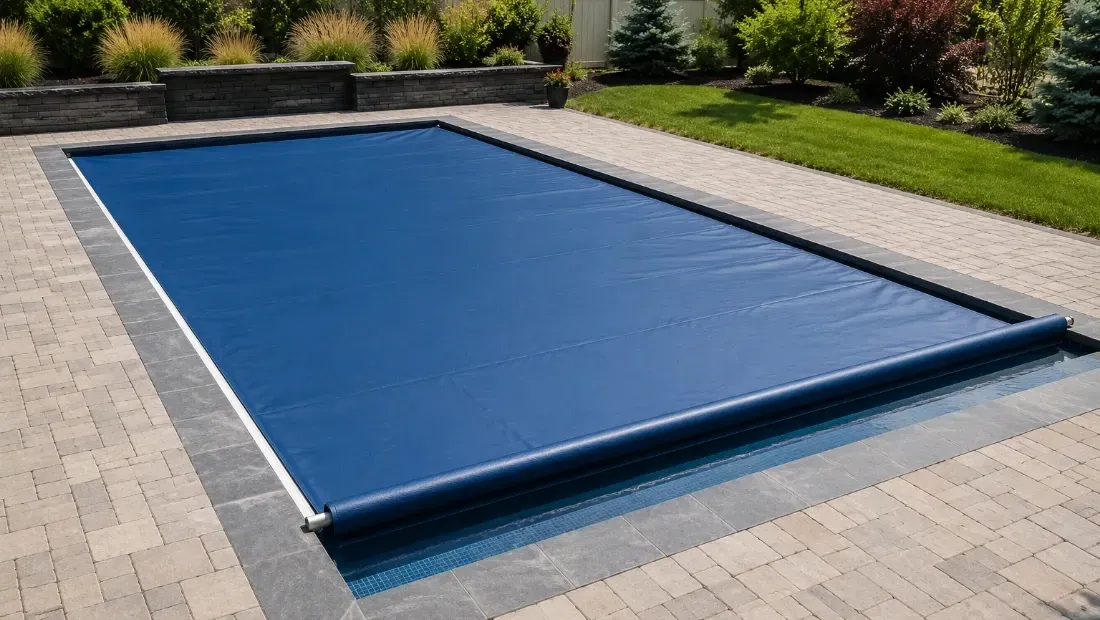
Manual safety covers are often a better fit for pools with curves, steps, raised features, or irregular layouts. Since they can be customized around the pool shape, they are commonly used for designs that may not work as easily with an automatic track system.
You Need Stronger Off-Season Protection
A manual winter pool cover is often chosen when seasonal protection is the main concern. In Connecticut, homeowners may look for covers that can stay in place through the closed season and help protect the pool from weather, debris, and general off-season exposure.
You Want a Lower Upfront Installation Cost
Manual pool covers that CT homeowners consider are often more budget-friendly than automatic systems. While pricing can vary by pool size, shape, material, and installation needs, manual covers are generally viewed as the more accessible option.
You Only Open and Close the Pool Seasonally
If the pool is mainly opened in spring and closed in fall, a manual safety cover may provide enough functionality. Homeowners who do not need daily cover operation may prefer a simpler seasonal setup instead of a motorized system.
Your Property Gets Heavy Leaves or Debris
Homes with trees, nearby landscaping, or frequent debris may benefit from a cover designed for longer-term closure. Safety pool covers can help limit the amount of debris entering the pool during the off-season and may make spring opening more manageable.
You Want Passive Safety During the Closed Season
Manual safety covers are often selected by families who want a cover that stays secured once installed. For homeowners comparing safety pool covers or Loop-Loc alternatives, the goal is usually to find a reliable seasonal option that supports safety, durability, and winter protection.
➤ YOU MIGHT ALSO LIKE:
Vinyl Pool Liners vs. Fiberglass Pools: A Clear Comparison
Frequently Asked Questions
Can an automatic pool cover replace a safety cover in Connecticut?
In many cases, an automatic cover is not considered a full substitute for a dedicated winter safety cover. For seasonal closure, a separate winter-rated cover is often recommended.
How long do automatic pool covers typically last in cold climates?
Automatic pool covers can last several years with proper care, though colder climates may affect fabric, motor, and track performance over time.
Is a manual safety cover good enough for a Connecticut winter closing?
Yes, a properly selected manual safety cover is generally suitable for winter pool closure in Connecticut.
What do pool builders near me usually recommend for cover installation?
Many pool professionals recommend using one cover for convenience during the swim season and another for added winter protection.
How much does it cost to install a pool cover in Danbury, CT?
Pool cover installation costs can vary widely based on pool size, cover type, materials, and site conditions. A local contractor can provide the most accurate estimate.
Choose the Right Pool Cover for Your Connecticut Pool
FJV Construction installs both automatic and manual safety covers for residential pools in Danbury, CT, and surrounding Fairfield and Litchfield County communities. Our team is licensed, insured, and has 15 or more years of pool construction and service experience across Connecticut.
Whether you need a convenient cover for daily swim-season use, a dependable winter pool cover, or guidance comparing different safety pool covers, our team can help you choose an option that fits your pool shape, budget, and seasonal needs.
Contact FJV Construction today to find out which cover fits your pool setup.