Pool Installation in Brookfield, CT: What Homeowners Near Candlewood Lake Should Know
What’s In This Guide
- What Makes Pool Installation in Brookfield, CT, Different From a Generic Pool Project?
- Why Should Homeowners Near Candlewood Lake Think About Drainage Before Installing a Pool?
- How Does Backyard Grading Affect Pool Installation in Brookfield, CT?
- What Should Homeowners Check Before Calling a Pool Builder in Brookfield, CT?
- How Does a Pool Design Consultation Help Homeowners Plan the Right Project?
- How Can Homeowners Choose the Right Pool Builder in Brookfield, CT?
- How Does the Pool Installation Process Usually Work?
- Frequently Asked Questions (FAQs)
- What Is the Best Next Step for Planning Pool Installation in Brookfield, CT?
Pool installation in Brookfield, CT, involves more than choosing a pool shape. Homeowners near Candlewood Lake should plan for slope, drainage, backyard grading, access, privacy, fencing, and local code review before major construction decisions begin.
The best approach to pool installation in Brookfield, CT, starts with a site-first plan. Homeowners near
Candlewood Lake should evaluate drainage, backyard grading, equipment access, privacy, fencing, and local permit requirements before choosing a pool layout. A pool design consultation helps match the project to the property instead of forcing a design onto a yard that may need grading, drainage work, or access planning first.
Quick Facts
- Start with site planning: slope, drainage, access, privacy, and code review.
- Plan drainage early to manage runoff, erosion, and low spots.
- Backyard grading affects placement, patios, walls, and access.
- Review key site factors before calling a pool builder.
- Use a consultation to match the pool plan to the property.
What Makes Pool Installation in Brookfield, CT, Different From a Generic Pool Project?
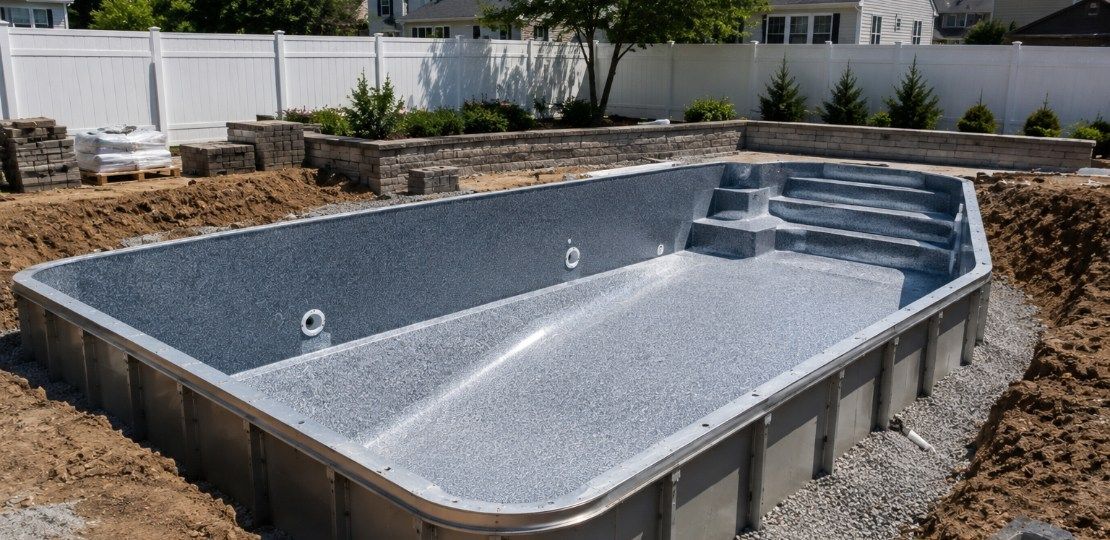
Pool installation in Brookfield, CT, often depends on local site conditions, especially near Candlewood Lake. Yard slope, runoff, soil movement, driveway access, privacy needs, and seasonal scheduling can affect pool placement, construction planning, and surrounding outdoor features.
A general pool guide may focus on materials, shapes, or visual style. A Brookfield pool project benefits from a site-first approach. Property conditions should guide many design choices before finishes are selected.
Key local planning factors include:
| Brookfield Site Factor | Why Homeowners Should Care |
|---|---|
| Sloped yards | Slope can affect excavation, grading, retaining walls, and patio transitions. |
| Stormwater runoff | Poor runoff control can create wet areas near the pool or patio. |
| Narrow access | Equipment routes can affect construction planning and site preparation. |
| Neighbor visibility | Privacy planning can influence fencing, landscaping, and pool placement. |
| Seasonal timing | Design, permits, site work, and construction require realistic scheduling. |
Homeowners near Candlewood Lake should avoid choosing a pool location based on appearance alone. A better plan starts with a site review. That review should assess how water moves, where equipment can enter, how grade changes affect the yard, and how fencing or screening will function.
Authoritative safety guidance also matters.
The U.S. Consumer Product Safety Commission
recommends pool barriers at least 48 inches high, with openings small enough to help reduce child access risks. Homeowners should also confirm local barrier, gate, and permit requirements with the Town of Brookfield before construction begins.
Why Should Homeowners Near Candlewood Lake Think About Drainage Before Installing a Pool?
Drainage planning helps move water away from the pool, patio, foundation areas, and low spots. Brookfield properties near Candlewood Lake may experience runoff patterns that make early drainage review essential before pool placement and hardscape design.
Drainage planning starts with evaluating where rainwater flows before, during, and after construction. Pool installation can change yard elevations. Patios, coping, retaining walls, and walkways can also alter runoff paths.
Poor drainage planning can contribute to:
- Standing water near patios
- Soil erosion around slopes
- Wet lawn areas
- Unstable hardscape edges
- Water movement toward foundations
- Landscape damage after storms
| Drainage Concern | Why the Concern Matters | Planning Question |
|---|---|---|
| Yard runoff | Runoff can collect near the pool area. | Where does rainwater naturally flow? |
| Low spots | Low areas can stay wet after storms. | Does the yard need correction first? |
| Patio drainage | Wet hardscape areas can become less comfortable and practical to use. | Will water drain away from walking areas? |
| Slope erosion | Erosion can affect the surrounding soil. | Does the design need grading or retention? |
The Environmental Protection Agency notes that
stormwater runoff can carry sediment and pollutants into nearby water resources. Brookfield homeowners near Candlewood Lake should treat drainage as both a property function issue and a local water quality concern.
How Does Backyard Grading Affect Pool Installation in Brookfield, CT?
Backyard grading shapes the land so the pool area can function safely and drain properly. Grading can affect excavation, patio levels, retaining walls, equipment access, and the connection between the pool and the rest of the yard.
Backyard grading means adjusting soil elevation. The goal is not always to create a perfectly flat yard. The goal is a usable layout with controlled water movement and stable transitions.
Signs a Brookfield yard may need grading include:
- Noticeable slope across the planned pool area
- Standing water after moderate rain
- Soil erosion near lawn edges or planting beds
- Uneven area where a patio would connect
- Limited access for excavation equipment
Grading affects both structure and experience. A poor grade can create awkward steps, steep patio transitions, difficult mowing areas, or drainage problems around the pool deck.
| Grading Area | Planning Impact |
|---|---|
| Pool elevation | Determines how the pool sits in the yard. |
| Patio transitions | Affects walking comfort and accessibility. |
| Retaining walls | Supports grade changes when slopes are significant. |
| Drainage routes | Directs water away from key areas. |
| Equipment access | Allows construction crews to reach the backyard safely. |
Backyard grading should happen during design planning, not after pool placement. Late grading decisions can create design compromises and budget pressure.
MORE ON THIS TOPIC:
Inground Pool Permits Explained: What Homeowners Need Before Construction Begins
What Should Homeowners Check Before Calling a Pool Builder in Brookfield, CT?
Homeowners should check five site factors before calling a pool builder in Brookfield, CT: yard slope, drainage patterns, equipment access, privacy needs, and seasonal timing. A clear checklist makes the pool design consultation more productive.
Homeowners do not need technical drawings before the first conversation. They should know how the yard behaves and what project goals matter most.
What Five Site Factors Should You Review Before a Pool Design Consultation?
The five most useful pre-consultation site factors are slope, drainage, access, privacy, and timing. These details help the contractor identify design limits, site preparation needs, and practical next steps.
Use this checklist before scheduling a pool design consultation:
- Yard slope: Is the planned pool area level, gently sloped, or steep?
- Drainage patterns: Where does water collect after heavy rain?
- Equipment access: Can excavation equipment reach the backyard?
- Privacy needs: Will the pool need fencing, plantings, or screening?
- Seasonal timing: When should design, permitting, and construction begin?
Homeowners should also gather photos of the yard after rain, rough measurements of the available space, and notes about utilities, septic areas, trees, sheds, fences, and patios.
Local requirements can vary by property. Brookfield homeowners should verify zoning, building, wetlands, and health department requirements with the Town of Brookfield before construction.
How Does a Pool Design Consultation Help Homeowners Plan the Right Project?
A pool design consultation connects the homeowner’s vision with site conditions. The consultation reviews layout, pool placement, drainage planning, backyard grading, access, materials, privacy, code considerations, and budget expectations before construction planning moves forward.
A pool design consultation should answer practical questions, not just aesthetic questions. A strong consultation helps homeowners avoid poor placement, drainage surprises, access delays, and unrealistic design expectations.
Typical consultation topics include:
- Yard layout and usable space
- Pool type, size, shape, and placement
- Drainage planning needs
- Backyard grading needs
- Equipment access routes
- Patio, coping, and hardscape options
- Fencing and privacy goals
- Seasonal scheduling expectations
- Local permit review steps
- Maintenance access and equipment location
A consultation also helps homeowners compare tradeoffs. A pool closer to the house may improve visibility and convenience. A pool farther from the house may offer more privacy or better sun exposure. A sloped yard may need retaining features or adjusted patio levels.
The strongest result is a design that fits the property instead of forcing a layout onto the site.
How Can Homeowners Choose the Right Pool Builder in Brookfield, CT?
Homeowners should choose a pool builder in Brookfield, CT, based on local site planning ability, drainage awareness, grading knowledge, communication, and design process. Visual appeal should not be the only factor in contractor selection.
A pool builder should explain how the project will work on the actual property. Brookfield homeowners should look for clear answers, realistic planning, and site-specific recommendations.
| What to Ask a Pool Builder | Why the Question Matters |
|---|---|
| Have you worked with sloped yards? | Slope affects excavation, grade changes, and patios. |
| Do you review drainage before design? | Drainage affects long-term yard performance. |
| Can the equipment reach the backyard? | Access affects construction feasibility and scheduling. |
| Do you provide a design consultation? | Consultation aligns layout, budget, and site needs. |
| How do you explain project phases? | Clear phases reduce confusion and delays. |
Homeowners should be cautious of vague answers. A reliable contractor should discuss what requires further inspection, what depends on local approval, and what cannot be confirmed until site evaluation.
How Does the Pool Installation Process Usually Work?
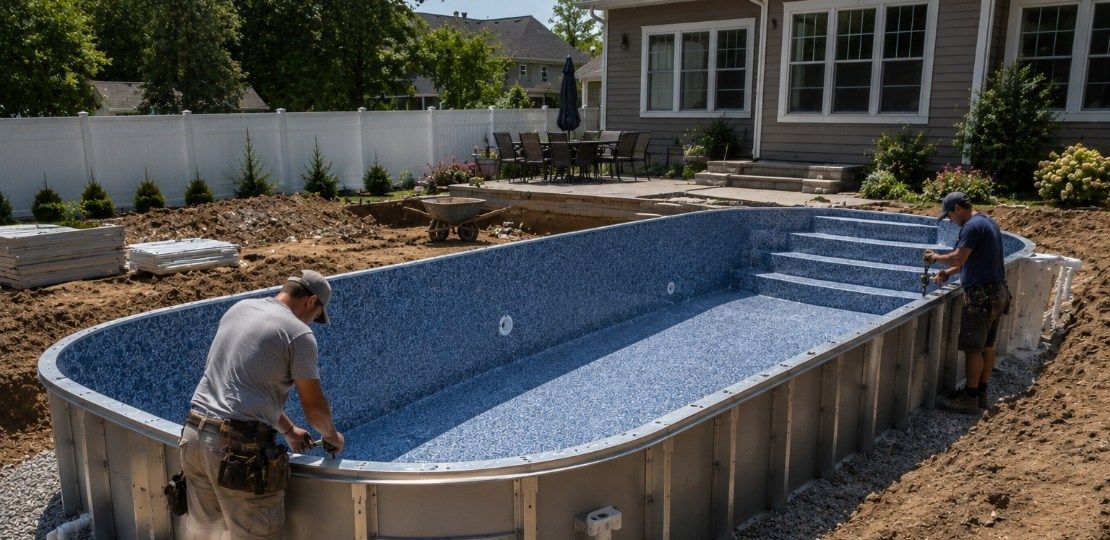
A Brookfield pool installation project usually moves from consultation to site evaluation, design planning, grading preparation, pool installation, hardscaping, and final walkthrough. The exact sequence depends on property conditions and local approval requirements.
What Are the Main Steps in a Brookfield Pool Installation Project?
Each step should address both the pool structure and the surrounding yard conditions.
- Initial pool design consultation: Review goals, budget, yard layout, privacy needs, access, and timing.
- Site evaluation: Evaluate slope, drainage, grading, utilities, trees, and available space.
- Design planning: Select pool placement, shape, patio connections, fencing concepts, and hardscape areas.
- Preparation and grading: Address leveling, drainage planning, excavation access, and soil movement.
- Pool installation: Build or install the selected pool structure according to the approved plan.
- Decking, hardscaping, and finishing: Complete coping, patios, walkways, retaining elements, and surrounding surfaces.
- Final walkthrough: Review completed work, safety considerations, maintenance access, and owner questions.
Frequently Asked Questions (FAQs)
How much space do homeowners usually need for a backyard pool?
Homeowners need enough space for the pool shell, required setbacks, fencing, equipment, walkways, and safe circulation around the pool area. Exact space requirements depend on the property layout, pool size, local rules, and design goals.
Can trees affect where a pool should be installed?
Yes. Trees can affect pool placement because roots, shade, falling leaves, and future growth may influence excavation, maintenance, drainage, and patio design. A site review should identify trees that may create construction or long-term upkeep concerns.
What pool shape works best for a smaller Brookfield backyard?
A simple rectangular, plunge, or compact freeform pool may work well for a smaller backyard. The best shape depends on setbacks, access, patio space, privacy needs, and how the homeowner plans to use the pool.
Should the pool equipment location be planned before construction starts?
Yes. Pool equipment location should be planned early because pumps, filters, heaters, and utility connections need safe access, proper clearance, reasonable noise placement, and service-friendly positioning.
Can a pool be planned with future outdoor living upgrades?
Yes. Homeowners can plan a pool layout with future patios, walkways, lighting, seating areas, fire features, or landscape upgrades in mind. Early planning helps reduce layout conflicts and avoid unnecessary rework later.
What Is the Best Next Step for Planning Pool Installation in Brookfield, CT?
The best next step is to schedule a pool design consultation with FJV Construction before finalizing pool placement, backyard grading, patio layout, or seasonal construction goals. Early planning helps connect the design with actual site conditions.
Ready to plan a pool that fits your Brookfield property?
FJV Construction helps homeowners evaluate pool placement, drainage, backyard grading, access, and outdoor layout before construction begins. Schedule a pool design consultation to start with a practical, site-specific plan.