
How Much Does Pool Equipment Replacement in Connecticut Cost?
What’s In This Guide
- Quick Answer: What Drives Pool Equipment Replacement Costs?
- Why Pool Equipment Condition Matters for Connecticut Homeowners
- Signs a Pool Pump, Filter, or Heater Needs Attention
- Repair or Replace? How to Decide
- How to Plan a Pool Equipment Replacement: Step-by-Step
- What Affects Pool Equipment Replacement Costs in Connecticut
- When to Call a Licensed Pool Professional
- Frequently Asked Questions
- Ready to Replace Your Pool Equipment?
A pool pump that won't prime, a heater that won't fire, or a filter that can't keep the water clear are common signals that equipment has reached the end of its service life. For Connecticut pool owners, the question that follows is almost always about budget: how much does pool equipment replacement cost, and is repair still worth trying first?
Pool equipment replacement costs in Connecticut depend on the part, the pool's size, the equipment's energy efficiency rating, and how much electrical or plumbing work the swap requires.
Quick Facts
- Pool equipment replacement costs in Connecticut vary by equipment type, pool size, efficiency, and installation complexity.
- Pumps, filters, heaters, and automation systems have different cost ranges and labor needs.
- Repair may make sense for newer equipment, while repeated failures can favor replacement.
- Energy-efficient pool equipment can lower operating costs.
- Licensed professionals should handle electrical, gas, or plumbing modifications when required locally.
Quick Answer: What Drives Pool Equipment Replacement Costs?
Pool equipment replacement in CT costs depending on part, pool size, energy efficiency, and installation complexity.
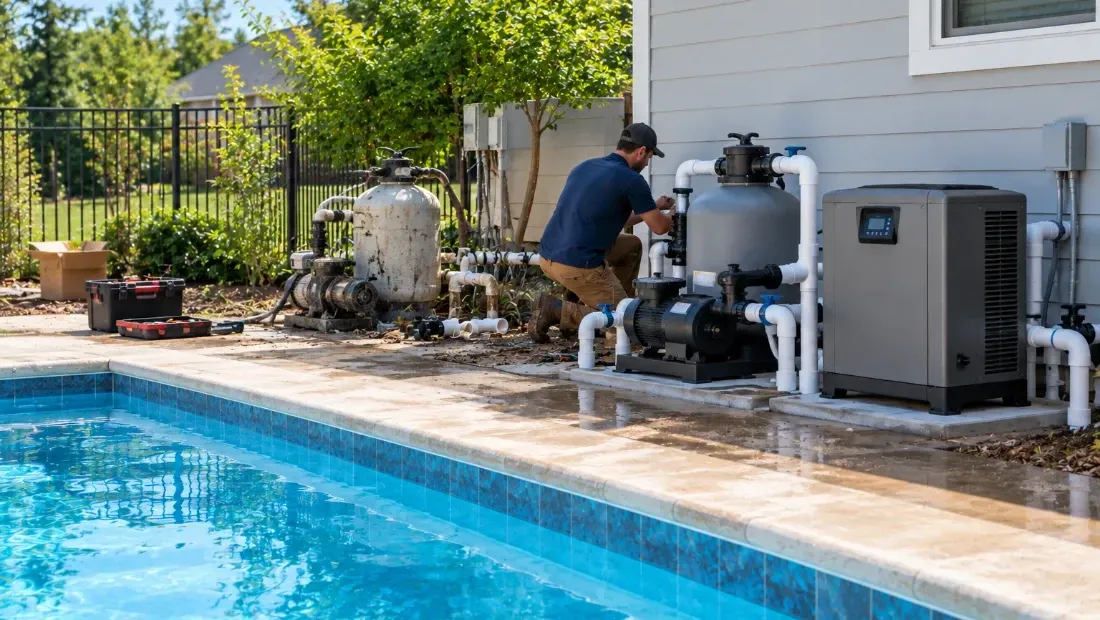
A pool filter replacement is a smaller job than a heater replacement that requires a new gas line or 240-volt circuit. Pool size affects flow rate requirements, which affects pump horsepower and filter capacity.
Energy-efficient models cost more upfront but reduce monthly operating costs. Installation
complexity, including rewiring, replumbing, or permit requirements, shifts the total further. There is no single number that applies to every Connecticut home, but understanding these four variables makes any contractor estimate easier to evaluate.
Why Pool Equipment Condition Matters for Connecticut Homeowners
Aging pool equipment does more than run inefficiently. A weakening pump struggles to circulate water evenly, which allows algae and bacteria to take hold faster, particularly during Connecticut's humid summer months. A failing heater shortens the usable swim season in a state where outdoor pool weather is already limited to a few months a year. A cracked or leaking filter can waste hundreds of gallons of water and push chemical costs higher as the system loses balance.
Equipment condition also affects the pool's structural systems over time. Reduced water flow can let sediment settle in plumbing lines, and inconsistent heating cycles put added strain on components that are already near the end of their expected lifespan. Addressing failing equipment before a full breakdown protects both the pool's performance and the property's long-term value.
Signs a Pool Pump, Filter, or Heater Needs Attention
Not every issue means immediate replacement, but these warning signs usually call for a professional evaluation.
Pool Pump Warning Signs
- Loud grinding, screeching, or rattling noises during operation
- Water leaking from the pump housing or seal area
- Reduced water flow at the return jets despite a clean filter
- Frequent tripped breakers or the pump failing to start
Pool Filter Warning Signs
- Cloudy water that does not clear after backwashing or cleaning
- Cracked tanks, torn cartridge pleats, or damaged grids
- Rising pressure readings that spike quickly after cleaning
- Sand or DE powder returning to the pool through the jets
Pool Heater Warning Signs
- The heater runs but water temperature does not rise
- Error codes, repeated ignition failures, or a pilot that won't stay lit
- Rust or corrosion visible on the heat exchanger or cabinet
- Rising energy bills without a corresponding increase in pool use
READ MORE:
Is a Permit Required for Residential Swimming Pool Installation?
Repair or Replace? How to Decide
Age, repair cost, and efficiency are the three factors that usually settle this decision.
| Factor | Favors Repair | Favors Replacement |
|---|---|---|
| Equipment age | Under 5 to 7 years | Beyond manufacturer's expected lifespan |
| Repair cost | Well below replacement cost | Approaching or exceeding half the replacement cost |
| Efficiency | Recently rated efficient model | Older single-speed pump or standard heater |
| Frequency of issues | First-time repair | Repeat breakdowns within the same season |
A single-speed pump nearing a decade of use, paired with a repair quote close to the price of a new unit, is a common case for replacement. A newer variable-speed pump with one failed part is usually worth repairing.
How to Plan a Pool Equipment Replacement: Step-by-Step
1. Confirm the Diagnosis
Have a pool professional identify the exact failure point before assuming a full replacement is necessary. A worn capacitor or a clogged impeller can sometimes resolve a pump issue that looks like a total failure.
2. Match Equipment to Pool Size and Usage
Pump horsepower, filter capacity, and heater BTU output should match the pool's gallon volume and how often the household uses it. Oversized or undersized equipment wastes energy and shortens its life.
3. Compare Efficiency Ratings
Variable-speed pumps and heat pump-style heaters cost more upfront but typically run more efficiently than single-speed pumps or gas heaters over a full season.
4. Confirm Permit and Licensing Requirements
Electrical or gas connections tied to new equipment often require a permit and must be completed by a properly licensed tradesperson under Connecticut law, discussed further below.
5. Schedule Installation Around the Swim Season
Off-season installation, particularly for heaters, can reduce scheduling delays before pool opening in spring.
What Affects Pool Equipment Replacement Costs in Connecticut
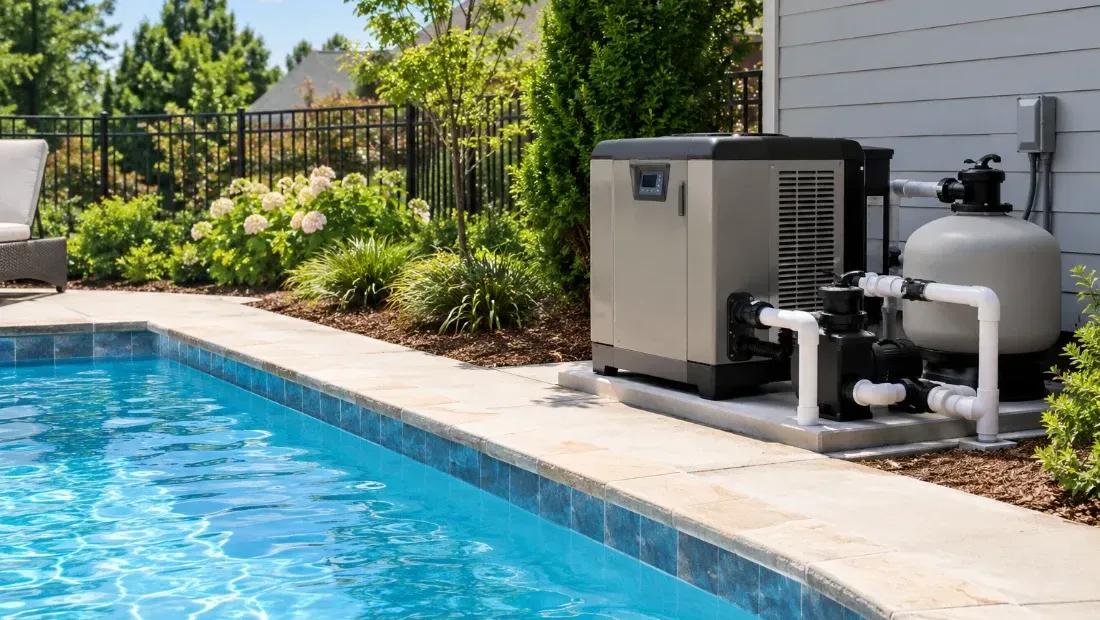
Costs vary because every pool, property, and equipment choice is different. The table below reflects general industry cost ranges reported by national home-services data sources and is not a quote for any specific project.
| Equipment | Typical Installed Range | Key Cost Factors |
|---|---|---|
| Pool Pump | $700 to $2,500 | Pool pump replacement cost can vary based on single-speed vs. variable-speed models, horsepower, and rewiring needs. |
| Pool Filter | $250 to $2,000 | Filter type (sand, cartridge, DE), pool size, plumbing changes |
| Pool Heater | $1,500 to $6,000+ | Costs of pool heater replacement can vary depending on fuel type (gas, heat pump, electric), BTU sizing, and new gas line or circuit |
| Automation System | Ranges widely by feature count | Number of components controlled, wiring complexity, integration with existing equipment |
Several additional factors move a project up or down within these ranges:
- Pool size and equipment type: Larger pools generally require higher-capacity pumps, filters, and heaters.
- Energy efficiency: ENERGY STAR certified variable-speed pumps use up to 70% less energy than standard models, according to the U.S. EPA and Department of Energy, which can offset a higher upfront cost over time.
- Installation complexity: Rewiring, replumbing, new gas lines, or 240-volt circuit installation add to labor and material costs.
- Site access and existing equipment condition: Older equipment pads may need modification to accept newer models.
- Permits and inspections: Municipal permit fees and inspection scheduling can affect project timing and cost.
- Timing: Scheduling equipment replacement outside peak swim season can sometimes ease contractor availability.
Because every property and pool system is different, the most accurate way to understand project cost is a direct site assessment.
When to Call a Licensed Pool Professional
Some pool equipment issues are simple maintenance items, but electrical connections, gas line work, and plumbing modifications tied to pump, heater, or filter replacement should be handled by licensed professionals.
In Connecticut, electrical work is regulated by the Department of Consumer Protection's Electrical Work Examining Board, and swimming pool plumbing work that involves potable water components or connections
required to be installed, renovated, or repaired by a licensed plumber or electrician falls outside the scope of general pool maintenance and repair work, according to the Connecticut DCP.
A qualified contractor can also confirm whether a specific replacement requires a local building or electrical permit, since requirements vary by town. A professional evaluation is the safest way to confirm what a project needs before work begins, particularly when a heater installation calls for a new gas line or dedicated electrical circuit.
Consider calling a professional when:
- Equipment issues involve visible corrosion, exposed wiring, or gas odors
- A pump or heater has failed more than once in a single season
- The pool has not been evaluated by a technician in several years
- A replacement will change the equipment's power or fuel requirements
Frequently Asked Questions
How long does pool equipment replacement usually take in Connecticut?
Timing depends on the equipment, site access, and the amount of work involved. Straightforward replacements may be relatively quick, while more involved projects can take longer.
Do I need to drain my pool before replacing equipment?
Not always. Many pool pump, filter, and heater replacements can be handled without fully draining the pool. The process depends on the equipment layout and project scope.
Can new pool equipment work with older pumps, filters, or heaters?
Often, yes. Compatibility depends on the pool system, plumbing, controls, and equipment requirements. A pool professional can confirm whether new and existing components can work together.
Should I replace all of my pool equipment at the same time?
Not necessarily. If other components are still working properly, pool equipment replacement can often be handled in stages based on condition, compatibility, and priorities.
Does new pool equipment usually come with a warranty?
Many new pool pumps, filters, and heaters include manufacturer warranty coverage. Terms vary by product and installation requirements, so Connecticut homeowners should review the warranty before purchasing.
Ready to Replace Your Pool Equipment?
At FJV Construction, we help homeowners in Danbury, Bethel, Brookfield, and nearby Connecticut communities explore options for updating older pool equipment.
Whether you're dealing with a pump, filter, heater, or another part of your pool system, our team can take a closer look and help determine what may make the most sense for your setup. We consider factors such as the pool's condition, how the equipment is being used, and the scope of the work before moving forward.
When additional electrical or plumbing work is involved, we can also help coordinate the appropriate licensed professionals as part of the project.