Swimming Pool Construction in Bethel, CT: What Impacts Price Besides Pool Size?
What’s In This Guide
What Really Drives Swimming Pool Construction Costs in Bethel, CT?
Why Hidden Site Variables Matter for Bethel Homeowners
Hidden Cost Factors Homeowners Often Overlook
How to Plan for These Variables Before Requesting a Quote
Permits, Utility Locates, and Code-Sensitive Considerations
Homeowners planning swimming pool construction in Bethel, CT, often start budgeting around one number: square footage. However, the pool's dimensions are only one part of the equation. Site-specific factors like soil conditions, backyard slope, equipment access, and utility locations are independent variables that can significantly affect a project's final cost.
Quick Facts
- Site conditions can significantly affect excavation scope. Ledge rock, dense clay, unstable soil, or high groundwater may require additional excavation, rock removal, dewatering, or drainage work.
- Sloped yards may require additional structural work. Depending on the grade and soil conditions, a sloped site may require retaining walls, additional backfill, drainage, or engineered support.
- Utility marking is a legal step, not optional homework. Connecticut's Call Before You Dig program requires the excavator to submit a locate request and allow at least two full working days, excluding weekends and holidays, before excavation begins.
- A compliant pool barrier is a code requirement, not a finishing touch. Bethel's swimming pool application requires completed pool fencing and applicable door alarms to be in place for the final inspection.
- Access limitations can change equipment strategy entirely. Tight side yards or fenced lots may require smaller machinery, hand excavation, or temporary structure removal, all of which extend labor time and cost.
What Really Drives Swimming Pool Construction Costs in Bethel, CT?
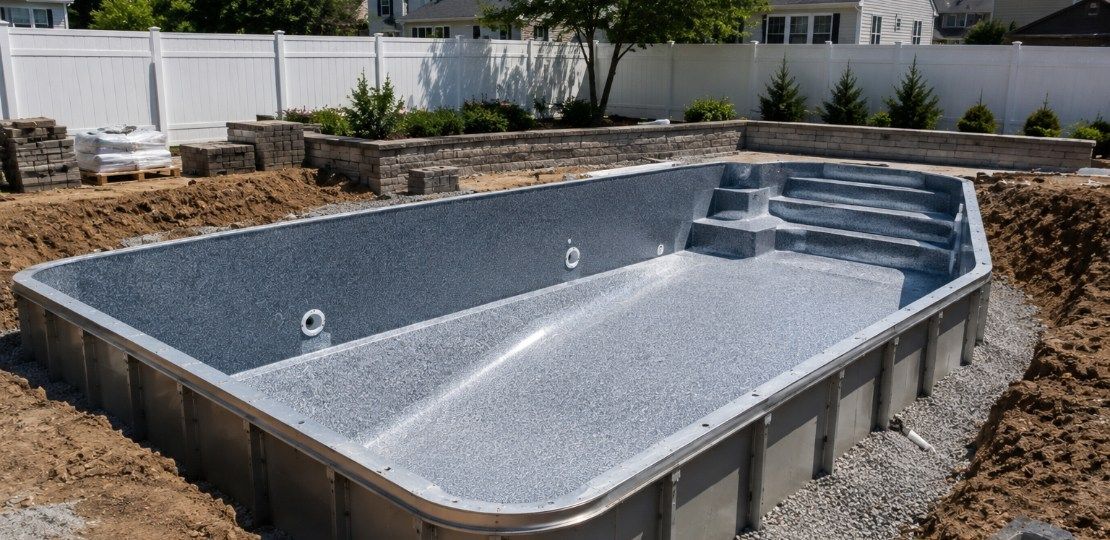
Pool size affects material quantities and excavation volume, but site-specific variables are significant factors in the final price. Soil type, yard slope, equipment access, utility locations, and add-on features like lighting or water elements each carry their own labor and material costs. A straightforward, flat, easily accessible lot in Bethel can have a pool installed for less than a similarly sized pool on a sloped or tight lot nearby.
This is why two neighbors with identical pool orders can end up with different final invoices. The pool itself is only one line item in a larger construction project.
Why Hidden Site Variables Matter for Bethel Homeowners
When site conditions are not accounted for during early budgeting, pool projects can exceed the initial estimate. Soil and slope issues discovered during excavation can pause work, require design changes, or add unplanned costs for retaining walls, drainage, or additional fill, which are critical pool construction cost factors for every project.
Beyond budget, these variables affect long-term performance. Poor drainage planning around a sloped yard can lead to water pooling near the pool shell or deck. Unaddressed soil instability can contribute to shifting or settling over time. Site assessment before construction begins is one of the reasons homeowners work with an experienced local contractor rather than relying on a generic online estimate.
Hidden Cost Factors Homeowners Often Overlook
Soil Conditions
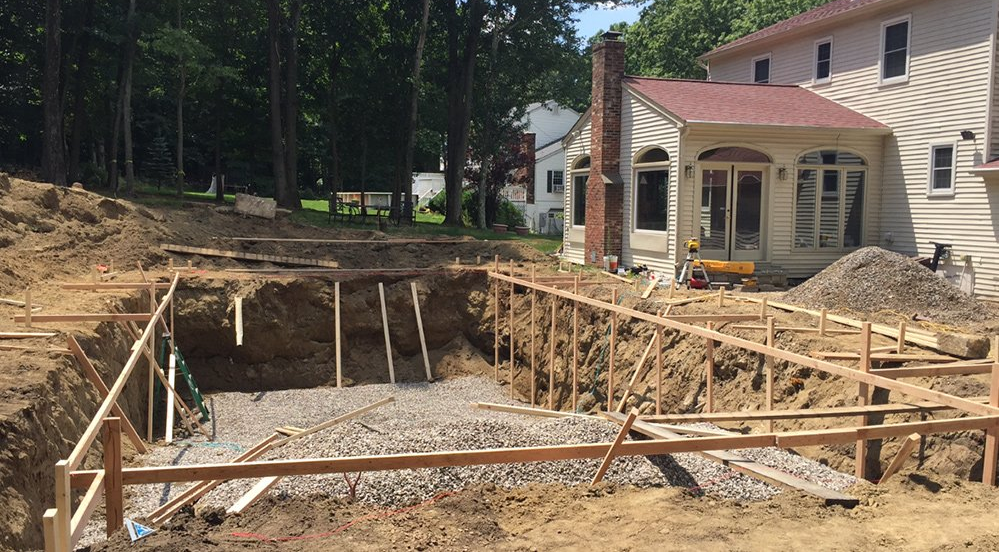
Loam and sandy soils may be easier to excavate than dense clay or ledge rock, depending on site conditions. Clay, ledge rock, unstable soil, and high groundwater can increase backyard excavation, rock removal, drainage, or dewatering requirements.
Slope and Grading
A relatively flat, stable backyard may require less grading than a sloped site. Sloped terrain may require additional grading, backfill, retaining structures, drainage measures, or engineered support to create a stable pool area, increasing material and labor requirements.
Site Access
Backyards reachable by standard excavation equipment keep labor efficient. Tight side yards, narrow gates, or fenced lots may require smaller machinery, hand digging, or temporary removal of fencing and landscaping, all of which extend the project timeline.
Retaining Walls
Sloped lots may require a retaining wall to manage grade changes and support surrounding soil. Terrain, wall size, soil conditions, drainage requirements, and site access can all increase the labor and material scope.
Decking and Hardscaping
Decking and hardscaping add material and installation scope beyond the pool itself. The complexity of the installation, material choice, and the total square footage surrounding the pool all affect the final project scope.
Utility Marking and Relocation
Before pool excavation with power or mechanized equipment begins, the excavator must submit a Call Before You Dig locate request. If underground utilities conflict with the planned excavation area, pool placement or project scope may need to change, and utility relocation may add cost and schedule time.
Lighting
In-pool and surrounding landscape lighting require additional electrical work, conduit runs, and fixtures. Scope varies widely depending on whether lighting is basic or a fully customized system.
Water Features
Waterfalls, deck jets, and bubblers add plumbing, pump capacity, and sometimes structural elements to the base pool design, increasing both material and installation cost.
Fencing
Bethel requires completed pool fencing and applicable door alarms for the final inspection. Fencing scope depends on barrier length, layout, material, and gate hardware requirements.
Equipment Upgrades
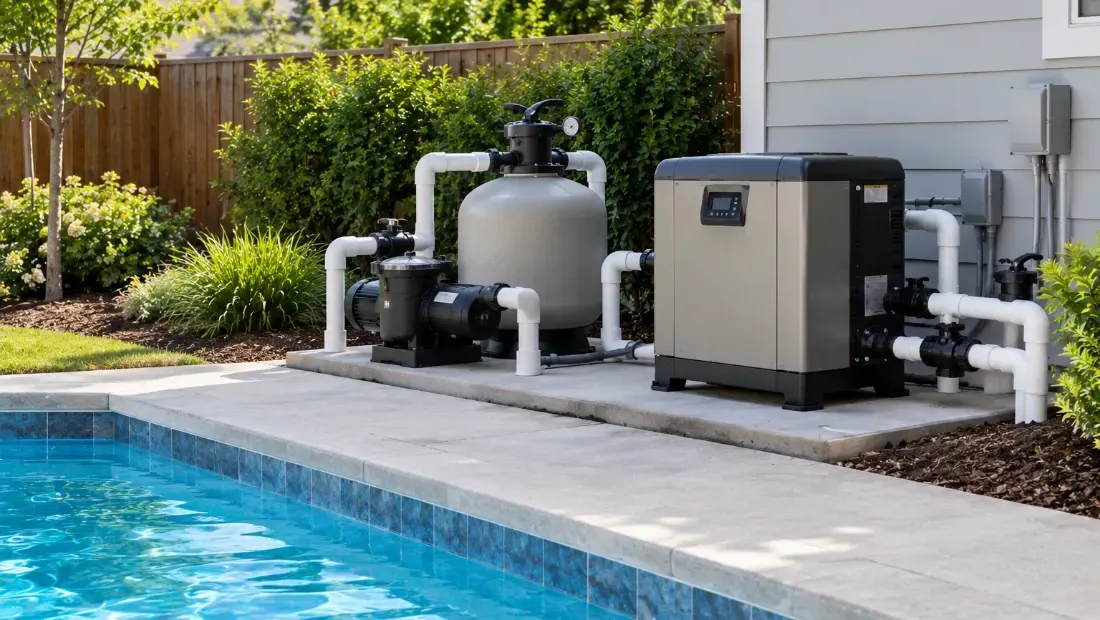
Variable-speed pumps, heaters, saltwater systems, and automation packages can increase equipment and installation costs based on system performance, project requirements, and homeowner preferences.
Cost Factor Snapshot
Variable-speed pumps, heaters, saltwater systems, and automation packages can increase equipment and installation costs based on system performance, project requirements, and homeowner preferences.
| Factor | Why It Affects Price | Typical Impact |
|---|---|---|
| Soil conditions | Rocky, clay, or wet soil requires extra excavation or dewatering | Complex soils increase excavation and dewatering requirements |
| Slope and grading | Uneven lots may require additional grading, backfill, or engineered support | Can meaningfully increase labor time |
| Site access | Tight lots may require smaller equipment or hand digging | Extends labor hours |
| Retaining walls | Sloped ground increases labor time for terracing and excavation | Adds material and labor costs |
| Decking and hardscaping | Price varies by installation complexity and square footage | Varies by material and square footage |
| Utility marking or relocation | Utility notification is required before applicable excavation; conflicts may require relocation | Can affect schedule and cost if relocation is needed |
| Lighting | Requires electrical work beyond the base pool | Scales with design complexity |
| Water features | Adds plumbing and structural elements | Scales with feature count |
| Fencing | Required as part of pool barrier compliance and Bethel's final inspection | Depends on barrier length, layout, material, and gate requirements |
| Equipment upgrades | Systems vary by performance and user preference | Varies by selected equipment and installation requirements |
How to Plan for These Variables Before Requesting a Quote
Step 1: Walk the Yard With Slope and Access in Mind
Note any visible grade change across the planned pool area and identify the widest, most direct path equipment would need to reach it.
Step 2: Ask About a Soil Assessment
A contractor can evaluate soil type during a site visit or recommend testing if ledge rock or high groundwater is a known concern in the area
Step 3: Plan Around Utilities and Schedule the Locate Correctly
Identify known utility constraints during design, then have the excavator submit the required Call Before You Dig request within the required timeframe before excavation. Utility conflicts may affect final pool placement, so they should be resolved before digging begins.
Step 4: List Every Feature Separately
Write out decking, lighting, water features, fencing, and equipment upgrades as individual line items instead of assuming they're bundled into a single pool price.
Step 5: Request an Itemized Estimate
An itemized proposal shows which costs come from the pool shell and which come from site-specific work, making it easier to compare quotes accurately.
Permits, Utility Locates, and Code-Sensitive Considerations
Swimming pool construction in Bethel can involve building and zoning review, utility marking, and required inspections. Connecticut requires utility notification before excavation, while Bethel's pool application requires completed pool fencing and applicable door alarms for the final inspection.
Connecticut's Call Before You Dig program requires excavators, including pool contractors and homeowners doing their own digging, to call 811 or submit a request at least two full working days, excluding weekends and holidays, before excavation begins.
Connecticut's 2022 State Building Code requires residential swimming pool barriers to comply with the 2021 International Swimming Pool and Spa Code, which generally requires the top of the barrier to be at least 48 inches above grade.
However, exact permit requirements, setback rules, and inspection steps vary by municipality, so specific requirements for a Bethel property should be confirmed with the local building department before construction begins.
When to Call a Professional Pool Contractor
Homeowners searching online for “pool construction near me” should look beyond a base pool price and ask whether the contractor performs an on-site evaluation. A site visit can identify soil, slope, drainage, access, and utility constraints that may affect the estimate and construction plan.
Site conditions that typically call for professional evaluation before a project moves forward include:
- Visible slope or grade change across the planned pool footprint
- Limited access through gates, side yards, or shared driveways
- Known ledge rock or high groundwater in the area
- Plans for retaining walls, water features, or extensive decking
- Uncertainty about permit requirements or utility line locations
Frequently Asked Questions
Does pool shape affect construction cost even if the square footage is similar?
Yes. A simple rectangular pool and a custom freeform pool with similar surface area can require different amounts of excavation, forming, finishing, and decking work. Curves, steps, benches, and other design details can increase construction complexity even when overall pool size stays similar.
Does pool depth affect the cost of an inground pool?
It can. Deeper sections require additional excavation and may increase the amount of structural material, finish material, and water the pool holds. Depth can also affect equipment specifications and other design requirements, so it should be considered separately from overall length and width.
Can a septic system or private well affect where a pool can be built?
Yes. Existing septic components, wells, easements, and other site constraints can limit where a pool fits on a property. Their locations should be identified during planning so the proposed pool can be evaluated against applicable setback and local approval requirements.
Can the home's electrical system affect pool construction costs?
Potentially. Pumps, heaters, lighting, automation, and other pool equipment create electrical demands that need to be evaluated during planning. Depending on the existing service and proposed equipment, additional electrical work may become part of the project scope.
Does clearing the backyard add to pool construction costs?
It can. Removing trees, stumps, old patios, sheds, fencing, or other obstacles before excavation adds labor and disposal work that would not be required on a clear, easily accessible site. These conditions are worth identifying during the initial site visit.
Planning Swimming Pool Construction in Bethel, CT?
FJV Construction is a licensed and insured pool construction, masonry, and excavation contractor serving Bethel, Danbury, Brookfield, and surrounding Connecticut communities. Site-specific factors like soil, slope, and access are evaluated directly, rather than estimated from a distance.
Site conditions affect every pool project differently. Request a pool construction estimate to get started with your project.