Pool Resurfacing Cost: Plaster, Quartz and Pebble Prices
What’s In This Guide
- How Much Does Pool Resurfacing Cost in the U.S.?
- Plaster, Quartz and Pebble: Which Finish Fits Your Pool?
- What Affects Pool Resurfacing Cost?
- What Happens During a Pool Resurfacing Project?
- How Do You Choose a Pool Resurfacing Contractor in Connecticut?
- Frequently Asked Questions
- Get a Pool Resurfacing Estimate From a Local Contractor
Pool resurfacing cost is usually the first question once plaster turns rough, stained, or starts to flake. Nationally, most projects land between $6,000 and $15,000. The finish you choose moves that number more than almost anything else.
Quick Facts
- Most resurfacing jobs fall between $6,000 and $15,000.
- Plaster costs the least upfront, while pebble lasts the longest.
- Quartz sits in the middle on price and durability.
- Pool size, condition, and finish drive your final estimate.
- A 28-day startup protects the new surface.
How Much Does Pool Resurfacing Cost in the U.S.?
The table below outlines estimated costs and typical lifespans for standard pool finishes across the country. Keep in mind that these figures represent national averages, and local pricing may vary depending on regional labor rates, material availability, and site-specific project requirements.
| Finish | Est. Price per Sq. Ft. | Est. Total (1,000 Sq. Ft.) | Typical Lifespan | Best For |
|---|---|---|---|---|
| Standard plaster | $6 to $8 | $6,000 to $8,000 | 7 to 12 years | Lowest upfront budget |
| Quartz plaster | $7 to $10 | $7,000 to $10,000 | 10 to 15 years | Color depth and added durability |
| Pebble | $7 to $15 | $7,000 to $15,000 | 15 to 20+ years | Longevity and a textured feel |
Plaster, Quartz and Pebble: Which Finish Fits Your Pool?
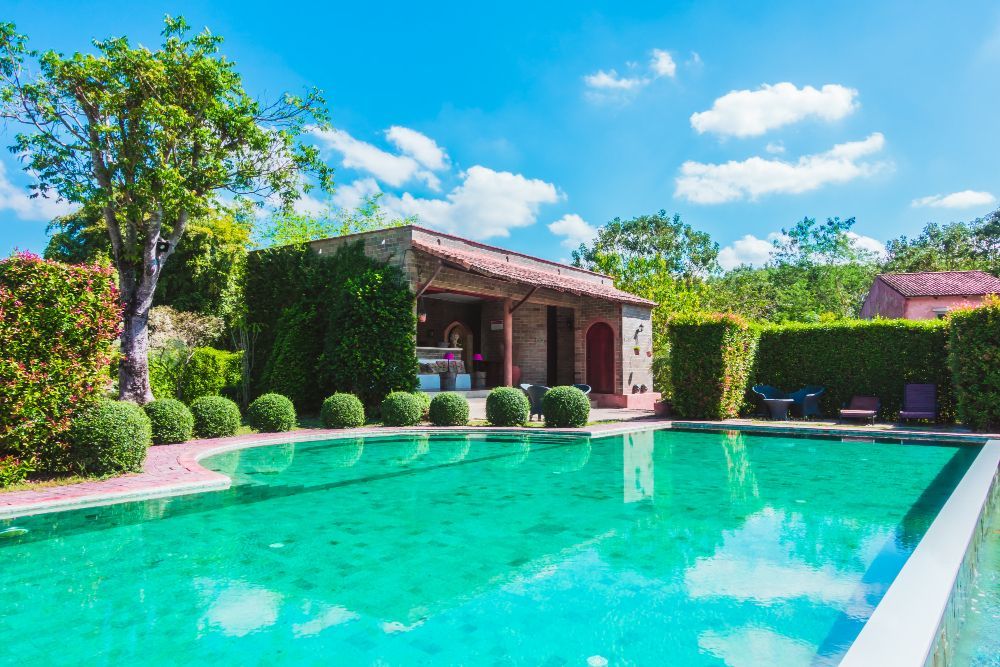
All three are cement-based finishes applied to a prepared concrete or gunite shell, and pebble also appears on fiberglass pools. Knowing how gunite, fiberglass, and vinyl pool types compare helps narrow the options, but the real differences between finishes show up in texture, durability, and upfront cost.
Standard Plaster: Lowest Upfront Cost
Traditional white plaster (often called marcite) is the budget-friendly choice. It also has the shortest lifespan, about 7 to 12 years. Water chemistry plays a big role in how long it lasts. Connecticut's freeze-thaw cycles add stress to pool surfaces, so planning around the shorter end of that range is a sensible habit for local homeowners.
Quartz Pool Finish: A Middle-Ground Option
A quartz pool finish mixes colored quartz fragments into the plaster, which creates a speckled look. The typical lifespan is 10 to 15 years. It costs more than standard plaster, and homeowners often choose it for the deeper color and longer service life.
Pebble Finish: Highest Cost, Longest Lifespan
Pebble finishes use smooth, rounded stones, which are less uncomfortable underfoot than other aggregates. Expect a lifespan of 15 to 20+ years. The wide price range reflects differences in stone size, blend, and how complex the pool's shape is.
What Does Pebble Tec Cost?
Pebble Tec is a premium brand of pebble finish, so its pricing generally follows the broader pebble finish range above. Where a specific product lands within that spectrum depends on the selected blend, applicator certification, and warranty terms. When comparing bids, ask for the exact product specified in writing to ensure every quote covers the same level of finish.
A longer-lasting finish can cost less per year of use. That only holds when the surface is installed and started up correctly.
What Affects Pool Resurfacing Cost?
Two pools with the same finish can price very differently. A contractor typically weighs these factors during a site visit:
- Surface area: Larger pools need more material and more labor hours.
- Pool type: Concrete, fiberglass, and vinyl pools each follow a different process.
- Finish and customization: Pigmented plaster or decorative tile inserts can raise the estimate.
- Repairs first: Cracks and leaks need attention before resurfacing, or they can damage the new finish.
- Draining, cleaning, and refilling: Estimates for draining and cleaning are roughly $600 to $650, and refilling ranges from $40 to $2,000, depending on how the water arrives.
- Labor and access: Tight yards, slopes, and hard-to-reach shells can add equipment and labor time.
- Add-ons: Tile, coping, and lighting work is often done while the pool is empty.
- Scheduling and timeline: Peak season demand or weather delays can impact overall scheduling and labor costs.
Published averages work as a starting point only. An on-site look shows what condition the shell is in under the old finish and whether lighting or other add-ons raise any pool electrical safety questions, and that is what sets a realistic number.
What Happens During a Pool Resurfacing Project?
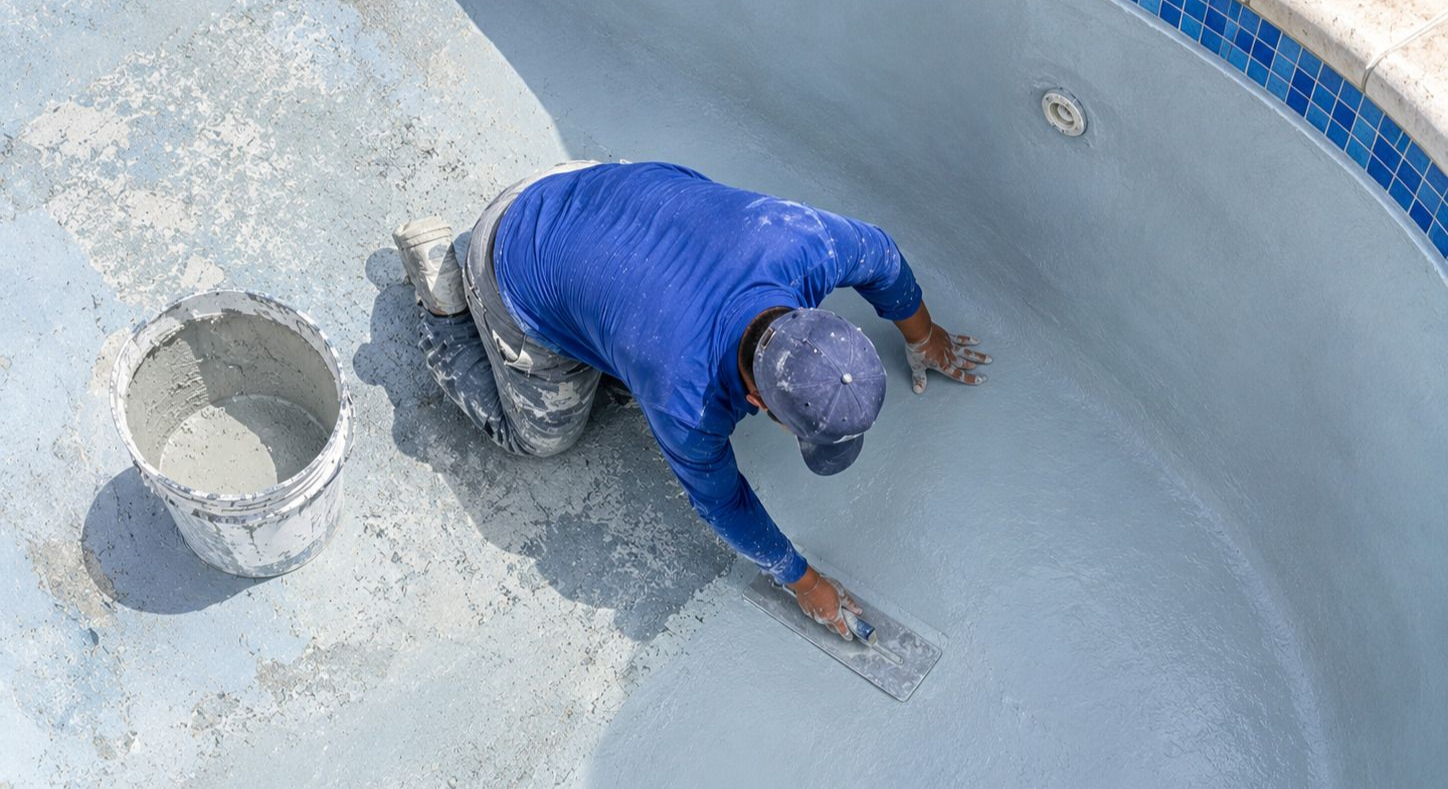
Resurfacing is more than a fresh coat of plaster. The old surface has to come off, and the shell has to be sound before anything new goes on.
- Inspection and scope: The contractor checks the surface, shell, tile, and plumbing.
- Draining and surface removal: The old finish is removed by chipping, sandblasting, hydro-blasting, or chemical stripping. The shell is then prepped for the new finish.
- Repairs: Cracks and leaks are fixed so they do not spread under the new surface.
- Finish application: Plaster, quartz, or pebble finish is applied, troweled, and finished according to manufacturer specifications.
- Continuous fill: The National Plasterers Council (NPC) startup guidance says filling should not stop once it begins, because a pause can leave a visible line on the finish.
- Startup: The 28-day care period begins as soon as the pool is full.
Why the 28-Day Startup Protects Your Investment
New plaster keeps curing after the pool fills. According to the NPC, about 86% of the cement cures within the first 28 days, so early care shapes how the surface looks and holds up. The NPC's published procedure includes these points:
- Brush the whole surface at least twice daily to remove plaster dust.
- Skip wheeled and automatic cleaners until the 28 days are over.
- Hold off on chlorine for the first 48 hours.
- Avoid shocking the pool for the first 30 days.
- Test and adjust the water on a set schedule.
Pool chemicals call for care. Always add chemicals to water, never water to chemicals, and pre-dilute acid in a bucket before it goes in the pool. Ask who handles the startup and follow that written plan. The NPC notes this is normally the remodeler’s job and ties into the finish warranty. Homeowners weighing saltwater versus chlorine pools should also ask when salt can be added, since the NPC procedure says no salt should go in for the first 28 days.
How Do You Choose a Pool Resurfacing Contractor in Connecticut?
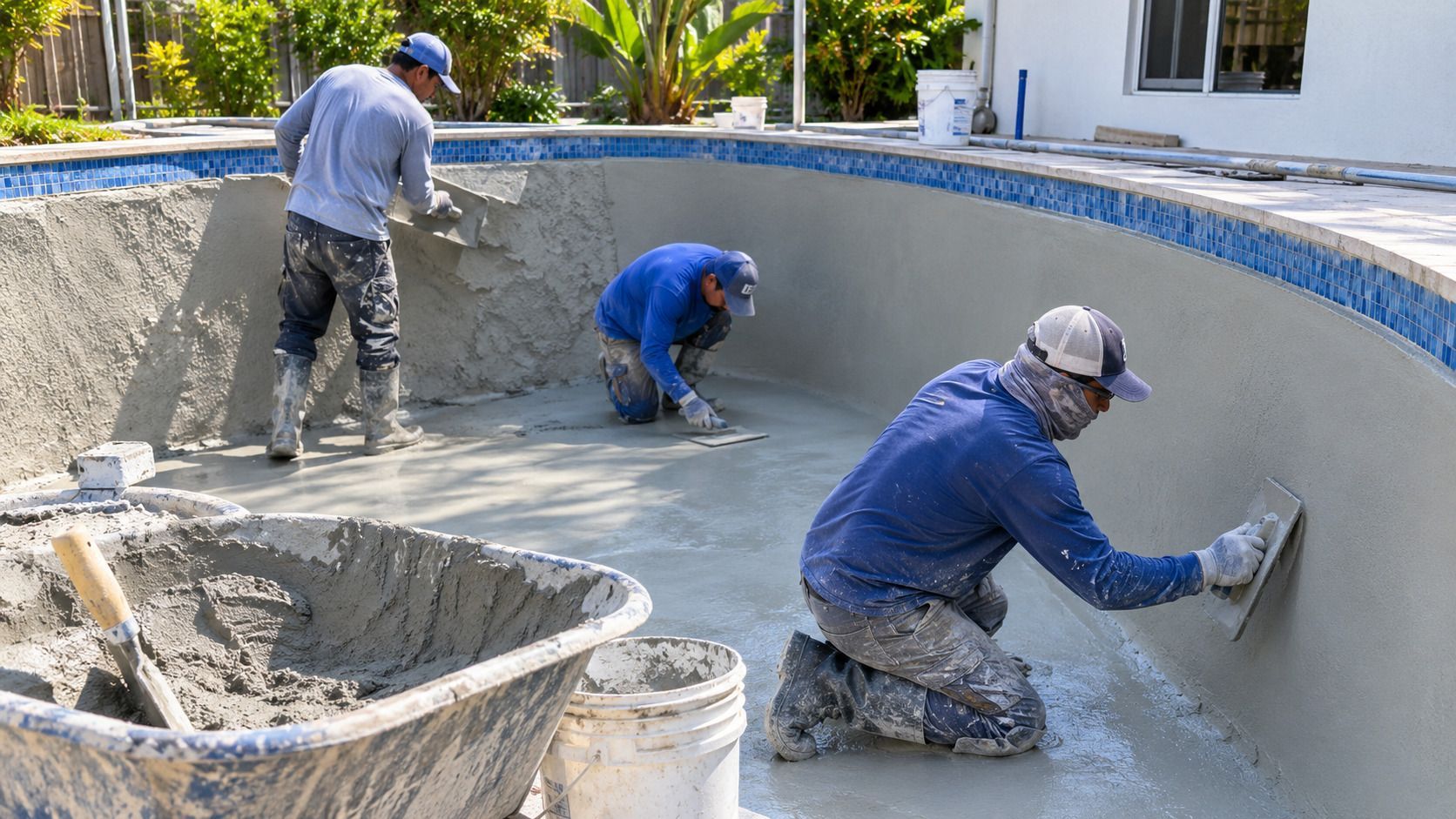
The right contractor protects the finish you paid for. A few checks help sort out the field:
- Verify registration: Connecticut's Department of Consumer Protection requires home improvement contractors to register and recommends checking credentials through the state's eLicense portal before you hire.
- Compare like for like: Collect at least three written estimates for the same finishing materials, with labor and materials itemized. Matching the finish and the scope across bids makes the numbers comparable, and an itemized breakdown shows exactly what each price includes.
- Ask about startup and warranty: Find out who runs the 28-day startup and what the warranty covers. Startup care affects how the finish holds up, and the warranty may depend on it being done correctly, so get the answer in writing before work begins.
- Watch payment terms: Avoid paying in full before work begins. A payment schedule tied to project milestones keeps the payments in step with the progress on your pool.
- Look for pool and masonry experience: Coping, tile, and decks often need attention alongside the surface itself. A contractor who handles both pool work and masonry can address those areas during the same project instead of leaving gaps around the new finish.
When comparing contractors, it can be helpful to work with a team that offers comprehensive
pool renovation and resurfacing services, covering everything from the underlying pool structure and masonry to the final surface finish. Local experience matters as well, since
pool contractors with local permit knowledge can help avoid delays.
Frequently Asked Questions
How long does pool resurfacing take?
Typical resurfacing ranges from 5 to 7 days, depending on pool size, material, and finish. Bad weather or a remote location can stretch it to as many as 14 days. A contractor can give a project-specific schedule after inspecting the pool.
Can vinyl and fiberglass pools be resurfaced?
Vinyl pools are not resurfaced. The liner is replaced instead. Fiberglass pools can be resurfaced, but the original gelcoat can only be applied at the factory. The old gelcoat is sanded and prepped, and then a finish such as pebble or a polymer coating goes on.
Can I resurface my pool myself?
Resurfacing is a large, complex task that generally overwhelms DIY skills, and mistakes can lead to leaks or costly damage. Homeowners can help with light prep, such as clearing furniture and debris from the pool area, and then leave the surface work to a professional.
What is the difference between pool resurfacing and replastering?
Resurfacing means removing the old finish and applying a new one. The new surface can be plaster, aggregate, tile, paint, or a polymer coating. Replastering is the version of that job that uses plaster, so the two terms overlap only when plaster is the chosen finish. A pebble or tile job is resurfacing without being replastered.
When can I swim after pool resurfacing?
Not right away. It is best to keep people and pets out of the pool during the fill process, as fresh finish can show footprints easily. You should only swim once the water is properly balanced and sanitized. Your contractor can provide a specific date based on your water test results. In addition, wait to turn on the pool heater until plaster dust has cleared, which typically takes between 4 and 10 days. If the project included permitted work, the final building inspection checklist is also worth reviewing before the pool reopens.
Get a Pool Resurfacing Estimate From a Local Contractor
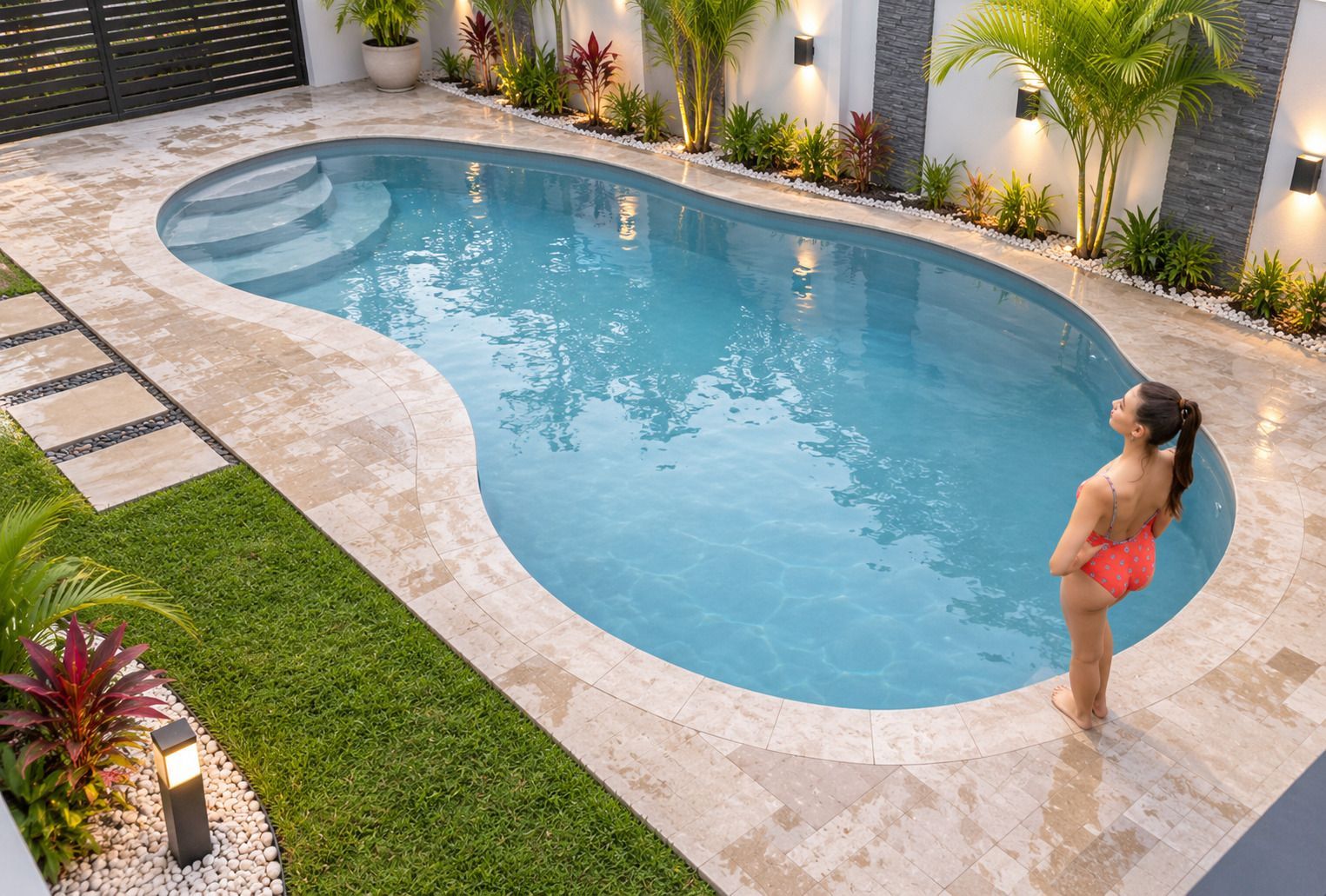
Planning pool resurfacing in Bethel, Danbury, Brookfield, or nearby Fairfield and Litchfield County towns? FJV Construction can inspect the pool, walk through plaster, quartz, and pebble options, and put an estimate in writing.
A site visit is the only reliable way to match a finish and budget to the condition of your pool.
Related posts: